Article source: The Terry Law Firm TN
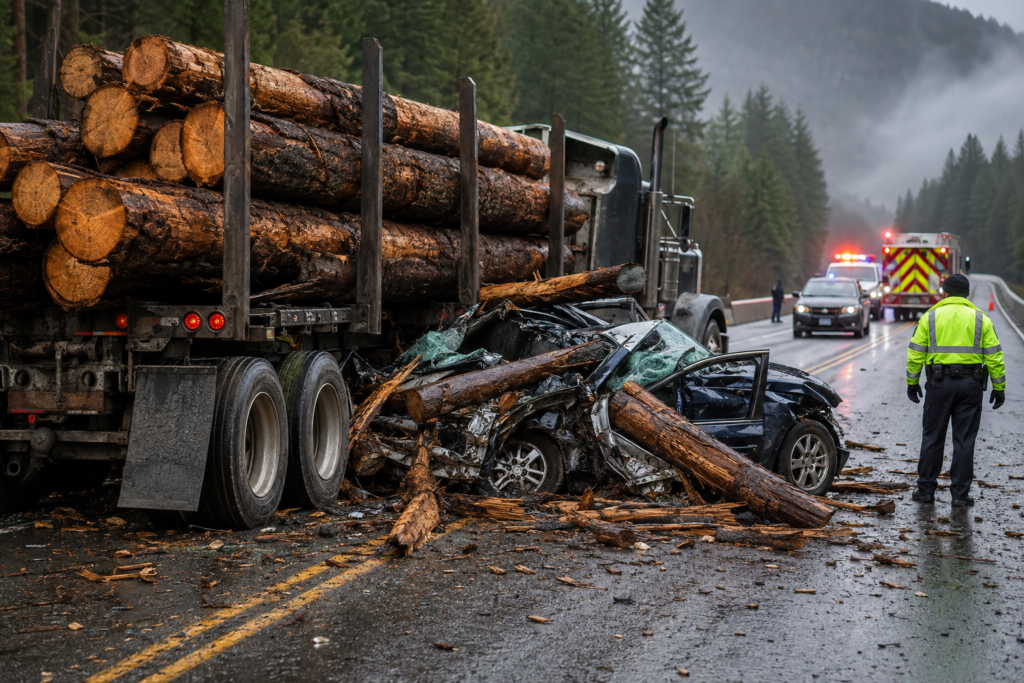
A collision with a timber-hauling truck can leave a person dealing with much more than vehicle damage. The size of the truck, the weight of its cargo, the condition of rural roads, and the way logs are loaded can all affect how a crash happens and how difficult the resulting claim becomes. Some victims face surgeries, lengthy rehabilitation, lost income, damaged property, and uncertainty about what comes next. The legal questions can also be more complicated than they first appear. A crash may involve a commercial driver, trucking company, logging contractor, timber company, cargo loader, maintenance provider, or even a manufacturer. Determining who contributed to the collision requires more than simply looking at the police report. For an injured person, the early investigation can matter greatly. Evidence such as photographs, vehicle data, driver records, inspection documents, cargo information, witness statements, and available surveillance footage may help establish what happened before important information disappears.
Why Logging Truck Crashes Require a Different Investigation
Logging trucks are not simply passenger vehicles carrying an ordinary load. They transport large, irregular pieces of timber that must be positioned and secured properly before the vehicle enters public roads. The configuration of the cargo can affect stability, braking, visibility, turning, and the truck’s overall handling. Researching competing legal resources shows that load security is one of the recurring issues in these cases, but a strong investigation should go beyond asking whether the logs were tied down.
The attorney should examine how the cargo was selected, stacked, restrained, inspected, and transported. A truck that overturns on a curve, loses part of its load, strikes another vehicle, or fails to stop may present very different liability questions. The physical evidence can help reconstruct the sequence rather than relying only on assumptions about fault.
The Most Common Causes Behind Serious Timber-Truck Collisions
Several factors can contribute to a logging truck crash. Driver behavior is one possibility, but it is only one part of the investigation. Commercial trucking claims often require attention to the vehicle, cargo, company practices, road conditions, and circumstances surrounding the trip.
Common contributing factors include:
- Speed that is unsafe for the road, weather, traffic, or cargo.
- Distracted or fatigued driving.
- Improperly secured or distributed logs.
- Excessive cargo weight or improper loading.
- Brake, tire, steering, or suspension problems.
- Inadequate driver training or supervision.
- Unsafe maneuvering on steep or winding roads.
- Failure to maintain required inspection or maintenance records.
- Poor visibility caused by the vehicle or cargo configuration.
The cause is not always obvious at the crash scene. For example, a rollover may initially look like a simple driving mistake, yet a later inspection could reveal a mechanical defect, cargo imbalance, inadequate maintenance, or another contributing factor.
Who May Be Responsible for the Injuries
One of the most important differences between a basic traffic claim and a commercial truck case is the number of parties that may need to be investigated. The driver could be responsible for negligent conduct, but liability may extend beyond the person behind the wheel. A trucking company may face responsibility for negligent hiring, inadequate training, poor supervision, maintenance failures, or the actions of an employee acting within the scope of employment. Depending on the circumstances, a logging contractor or cargo-loading operation may also become relevant. In some cases, a defective component can raise questions involving a manufacturer or maintenance provider. The exact parties depend on the facts and applicable state law, so an investigation should be completed before reaching conclusions about liability.
| Potential party | Why they may matter |
| Truck driver | Driving behavior, fatigue, distraction, speed, and compliance with safety rules |
| Trucking company | Hiring, training, supervision, maintenance, and company policies |
| Logging contractor | Loading, transportation arrangements, and operational practices |
| Cargo loader | Weight distribution, stacking, and securement |
| Maintenance provider | Inspection, repair, or defective maintenance issues |
| Vehicle or component manufacturer | Possible product defects that contributed to the crash |
This broader view can prevent a claim from focusing on only the most visible person or company while overlooking other sources of evidence and responsibility.
How a Logging Truck Accident Attorney Builds the Evidence
A strong claim usually begins with evidence preservation. Commercial vehicles can generate substantial documentation, and some records may become harder to obtain as time passes. A Logging truck accident attorney may investigate the crash scene, review photographs, identify witnesses, obtain available video, inspect the vehicles, and examine trucking documentation. Depending on the case, the investigation can also involve electronic vehicle information, driver qualification records, inspection materials, maintenance history, dispatch information, cargo records, and company policies.
The physical truck can be especially important. Damage patterns may help determine the direction of impact, vehicle movement, braking, rollover dynamics, or whether cargo shifted before the collision. The condition of straps, chains, bunks, stakes, tires, brakes, and other components may also become relevant. The goal is not simply to collect a large volume of paperwork. The useful evidence is the evidence that connects a specific act or omission to the crash and resulting injuries.
What Compensation May Be Available After a Serious Crash
The value of a personal injury claim depends on the injuries, losses, evidence, applicable law, insurance coverage, and other circumstances. There is no universal settlement amount for this type of accident. A claim may potentially include medical expenses, future medical care, rehabilitation, lost wages, reduced earning capacity, property damage, and certain non-economic damages where permitted by state law. Wrongful death claims may involve a different set of damages and legal requirements. A useful approach is to document losses as they occur rather than waiting until the claim is nearly resolved.
Medical bills, treatment records, employment information, repair estimates, and other supporting documents can help establish the financial consequences of the collision. Severe injuries can also create future expenses that are not visible immediately after the crash. A person may need continued physical therapy, additional treatment, assistive equipment, changes to employment, or long-term care. A careful claim assessment should account for those possibilities when supported by medical evidence.
Why Early Legal Action Can Protect a Truck Accident Claim
Commercial trucking companies and their insurers may begin reviewing a serious collision quickly. That makes early evidence preservation important for an injured person who may be recovering and unable to conduct an investigation independently. A logging truck accident attorney can communicate with insurers, identify potentially responsible parties, preserve relevant evidence, and investigate the circumstances before memories fade or physical evidence changes. This does not guarantee a particular result, but it can make the claim more organized and evidence-driven.
The timing of a lawsuit also matters because every state has deadlines for personal injury and wrongful death claims. Those deadlines can vary significantly based on jurisdiction and circumstances. Waiting too long can create unnecessary legal problems even when the underlying claim appears strong.
What to Look for When Choosing Legal Representation
Not every personal injury lawyer has the same experience with commercial trucking litigation. A case involving a loaded timber truck can require knowledge of trucking practices, accident reconstruction, cargo securement, insurance issues, and the rules that apply to commercial vehicles. When evaluating an attorney, consider whether the lawyer regularly handles serious truck collision cases, understands evidence preservation, has access to appropriate investigators or experts, and is prepared to take the matter to litigation when a fair resolution cannot be reached.
It is also reasonable to ask how the attorney evaluates liability when several businesses or individuals may be involved. A narrow investigation can miss important facts, while a well-planned investigation can identify the relationships among the driver, carrier, logging operation, cargo loader, and other parties.
A Practical Evidence Checklist After the Collision
If you are physically able to do so, preserving basic information can help your legal team later. The priority should always be immediate safety and medical attention rather than collecting evidence at an unsafe crash scene.
- Keep photographs or videos already available from the accident scene.
- Save contact information for witnesses.
- Keep medical records, bills, prescriptions, and treatment documentation.
- Preserve information about missed work and lost income.
- Keep vehicle repair estimates and property-damage documents.
- Write down your recollection of what happened while the events are still fresh.
- Avoid making detailed statements about fault to an opposing insurer before receiving appropriate legal guidance.
These records can provide a useful starting point for reconstructing the accident and documenting its financial impact.
What Makes a Strong Claim Different From a Weak One
A serious claim is not based only on the fact that a large truck was involved. The central issue is evidence. The investigation must connect the conduct of a responsible party with the collision and then connect the collision with the injuries and losses being claimed. For example, if a logging truck overturns because its cargo was improperly distributed, the case may require evidence about who loaded the timber, who inspected the load, what securement system was used, and whether the driver or company had reason to recognize a problem. If a mechanical failure caused the crash, maintenance and component evidence may become more important.
That is why photographs alone may not tell the complete story. A thorough claim considers the physical evidence, documentary records, witness testimony, medical documentation, expert analysis, and applicable trucking requirements together.
Building a Stronger Path Forward After a Serious Truck Collision
A major logging truck collision can create physical, financial, and emotional challenges that continue long after the vehicles are removed from the roadway. The legal side of the matter can become complicated when commercial operations, cargo loading, maintenance records, insurance coverage, and multiple parties are involved. The strongest approach is usually evidence first. Understanding how the crash occurred, identifying every potentially responsible party, documenting the full extent of the injuries, and preserving relevant records can give an injured person a clearer foundation for pursuing compensation.
If you are searching for a logging truck accident attorney, look for legal counsel with meaningful experience in commercial truck litigation and serious injury claims. The right attorney should be prepared to investigate the complete chain of events rather than treating the collision as an ordinary traffic accident.
Conclusion
A logging truck crash can leave behind questions that cannot be answered by the accident report alone. Cargo handling, driver conduct, vehicle maintenance, company practices, road conditions, and other factors may all need to be examined before responsibility becomes clear. For an injured person, prompt medical care, careful documentation, evidence preservation, and timely legal advice can all make a meaningful difference. A thorough investigation can help establish what happened, identify the parties involved, and determine what compensation may be available under the law.