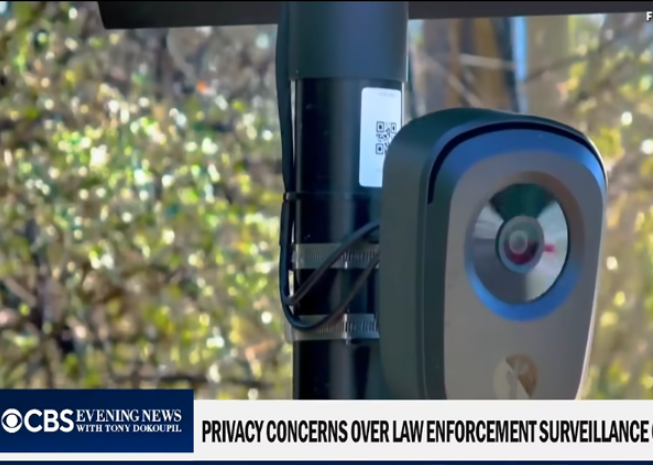
Flock cameras are automated license-plate reader (ALPR) systems made by Flock Safety that use cameras and software to capture vehicle images, read plate numbers, and alert participating law-enforcement agencies to vehicles linked to investigations or watch lists.
Their use has expanded rapidly in cities, neighborhoods, and businesses as a tool for locating stolen cars, missing people, and suspects. Data is shared through large regional networks that enable agencies to exchange information.
Flock cameras have now joined data centers as the focus of concern and complaint. Critics argue that the systems enable warrantless tracking of ordinary drivers, can be misused or accessed without adequate oversight, and may disproportionately target “marginalized communities.”
One of the biggest concerns regarding ALPRs is how they both create and reinforce racially biased policing. My colleagues, Drs. Jonny Finn and Andrew Baird, and I recently completed a landmark geospatial analysis titled “Surveillance Inequality: Race, Poverty, and the Geography of ALPR Deployment.”
Our study of 614 cameras in the Hampton Roads area found that race and class are the primary predictors of where these cameras are placed. (It is worth noting that Hampton Roads officials did not release the locations of these ALPRs willingly; they were forced to do so by a federal judge.) The ALPRs completely encircle Norfolk State University, the region’s only public HBCU, for instance.
Knox County Mayor Glenn Jacobs has sent a letter notifying Flock Safety that he intends to terminate a contract with the controversial company. https://t.co/0nCxbQ29yt
— WATE 6 On Your Side (@6News) August 24, 2026
These devices have also become the target of vandalism.
The Dallas Police Department says there has been an increase in Flock cameras being destroyed.
“We lose that visibility and that investigative value from those cameras that are vandalized,” said Sgt. Adam Reinhart.
At least 25 Flock cameras have been vandalized so far, Reinhart says.
“It’s become popular to cut down Flock cameras. And so we’re just seeing that trend here in Dallas. Along with, you know, throughout the country,” he explained.
Winona police are investigating after all eight of the city’s Flock cameras were cut down and stolen. It’s the latest city in the state to experience Flock camera theft or vandalism; cameras have been reported stolen or damaged in Duluth, Plymouth, Fari… https://t.co/0nAGHFk999
— KSTP (@KSTP) August 5, 2026
Fighting crime and ensuring there are consequences when laws are broken is a necessary part of civilized living. One important question to address is if Flock cameras work as advertised.
A study by Ian Adams and Scott Mourtgos found that police agencies adopting fixed ALPR networks saw an estimated 11% drop in vehicle thefts over the following year. It also found higher vehicle-theft clearance rates, although the authors caution that some of that increase may reflect broader anti-theft efforts already underway, and recovered vehicles were located about six hours sooner on average.
Adams and Mourtgoss argue that these potential public-safety benefits must still be weighed against documented risks of misuse and recommend independent audits, limited data retention, and strict access controls. Their analysis, published in City Journal, hit three key points.
Our analysis produced three results. First, in the year following ALPR deployment, motor vehicle theft declined about 11 percent relative to comparison agencies. The decline held through the end of the year—a sign that it’s the cameras, not the publicity around them, driving the change. The same agencies’ other property crime did not fall at similar levels, which is what you would expect if the cameras were making the difference rather than some citywide shift in crime or reporting.
Second, arrests rose, with clearance of vehicle theft increasing about 16 percent. Complicating the story, the increase begins in the final months before the recorded activation date. That reflects the reality that departments often buy cameras as part of a broader push against vehicle theft. Still, the pre-trend suggests that not all of the increase in clearance can be attributed to the ALPRs themselves.
Third, while the cameras did not detectably accelerate the return of stolen vehicles overall, among vehicles that were recovered, the typical recovery arrived about six hours sooner, a small but significant change. Why didn’t the return rate for all stolen vehicles go up? The likely reason is that a camera-driven recovery requires a stolen car to pass an active camera with a readable plate that has been entered on a hot list, followed by an officer free to respond. Most recovered vehicles are instead located by their owners or found abandoned or crashed. And if they’re not found quickly, they’re often not found at all.
Flock cameras clearly get results: an 11 percent drop in vehicle theft and faster recoveries are hard to dismiss, and the units have proven valuable to law enforcement.
But effectiveness alone doesn’t settle the debate.
The same technology that helps catch car thieves can just as easily be turned toward tracking ordinary people without cause, and the growing wave of vandalism shows how deep that unease already runs.
Christoper Goodson, a Florida police officer faces criminal charges after allegedly misusing AI-powered Flock camera to track his ex-wife 717 times pic.twitter.com/SBfU4VE7KX
— internet hall of fame (@InternetH0F) August 20, 2026
Flock has already begun addressing security concerns.
Likely because of public scrutiny and lost business, Flock Safety founder Garrett Langley released new policy changes to strengthen public trust and create a society where “safety and privacy can coexist.”
The changes, he said, fall under three categories: Safety, security and accountability:
Data sharing is now disabled by default, searches are recorded in audit logs and customers can set their own retention periods within applicable legal requirements, Langley explained.
Flock also reduced the default retention period for license plate reader data from 30 days to seven days, after which the data is deleted unless an agency has configured a different retention period. Flock said it also does not sell customer data, use it for advertising or share it with third parties without the customer’s permission.
The smartest path forward isn’t banning these cameras or giving police unchecked access, but pairing their crime-fighting value with real audits, data limits, and accountability.
Donations tax deductible
to the full extent allowed by law.