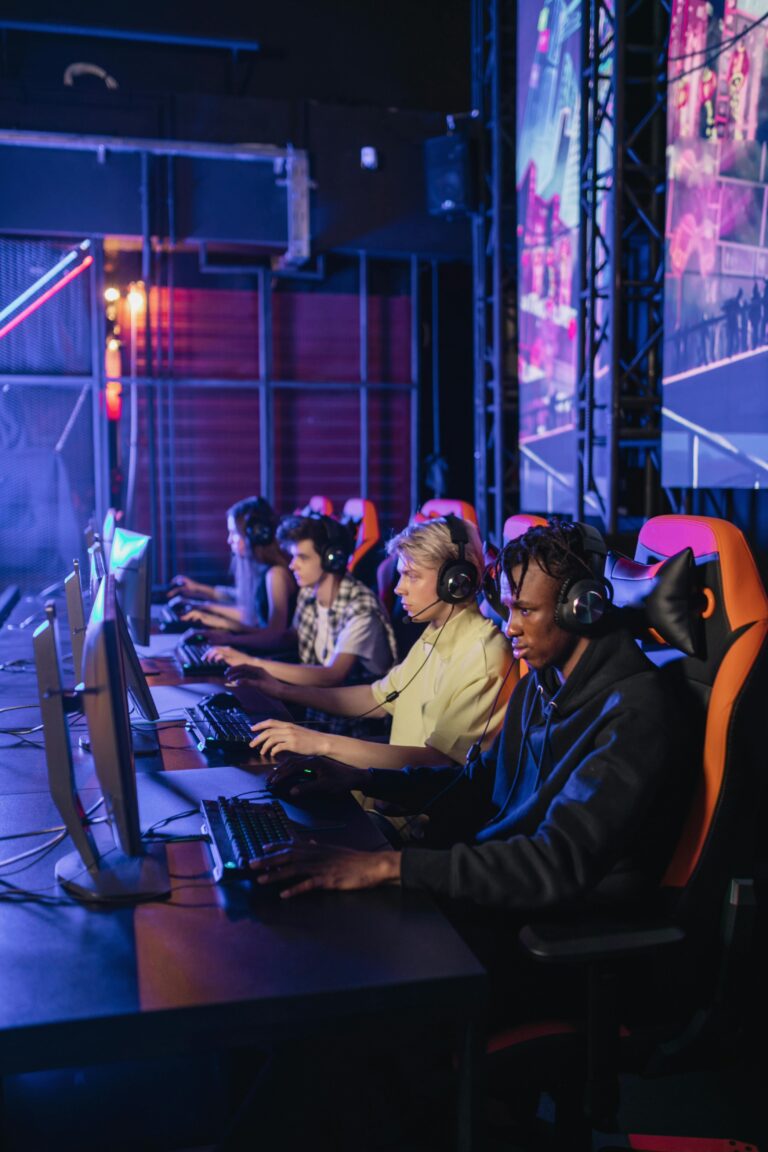
In February 2026, Esports has completed its transition from a “digital novelty” to a core pillar of the global sporting landscape. The industry is no longer characterized by speculative venture capital but by market consolidation, institutional legitimacy, and the massive rise of mobile-first competition.
As of February 14, 2026, here is the state of the esports industry.
1. Market Evolution: From Scale to Sustainability
After the “Esports Winter” of the early 2020s, 2026 is the year of Professional Maturity. [1.4, 4.3]
- Economic Realignment: The global market is projected to reach $3.6 billion in 2026 (with some projections as high as $5.3 billion), growing at a CAGR of roughly 20%. The focus has shifted from hyper-expansion to “sustainable earnings” and diversified revenue stacks. [1.2, 1.4, 4.3]
- Institutional Recognition: Esports is now framed more frequently in financial journals than entertainment blogs. Universities globally offer Esports Management degrees, and former pro players are increasingly recruited for corporate analytical roles. [4.4]
- The “Franchise” Stability: Permanent slots in major leagues (like the League of Legends LCS) have eliminated relegation risk, allowing investors to apply valuation frameworks comparable to NBA or NFL franchises. [1.4]
2. The Global Power Shift: Mobile & The Middle East
The geographic and platform centers of gravity have moved significantly in 2026. [1.4, 2.1]
- Mobile Dominance: Smartphones accounted for nearly 49% of 2025/2026 revenue. Titles like Mobile Legends: Bang Bang and PUBG Mobile have democratized competition in regions with less access to high-end PCs. [1.4, 4.1]
- The Middle East Frontier: While North America remains the largest market by revenue, the Middle East is the fastest-growing. [1.4]
- Olympic Calibrations: The International Olympic Committee (IOC) recently shifted its roadmap. While a major 12-year partnership with Saudi Arabia was mutually cancelled in late 2025, the Olympic Esports Games are still a primary goal for 2027 under a new, refined partnership model. [3.1, 3.3, 4.1]
3. Viewership: Gen Z’s “Digital Stadium”
By 2026, the global esports audience is expected to exceed 640 million people. [2.1]
- Interactive Arenas: Traditional television is being replaced by “interactive broadcasts” on platforms like Twitch and YouTube Gaming. These 2026 streams feature Live Chat, Voting Polls, and Real-Time Data Overlays that allow fans to influence the broadcast experience. [2.4, 4.2]
- Multi-Language AI: A “killer feature” of 2026 is AI-powered Real-Time Translation for live broadcasts, allowing a fan in Brazil to watch a Korean tournament with a live, localized audio cast. [4.2]
- Demographic Target: 73% of viewers are aged 18–34, a demographic that traditional sports leagues are struggling to retain, leading to more “Crossover” events (like F1 Sim Racing). [2.3]
4. Comparison: Esports vs. Traditional Sports (2026)
| Feature | Traditional Sports | Esports (2026) |
| Consumption | Passive (Television/Stadium). | Interactive (Streaming/Social). [2.4] |
| Monetization | Tickets, Media Rights, F&B. | Sponsorships (40%), Digital Assets, Betting. [1.4, 4.3] |
| Accessibility | Geographic (Local Team). | Global (Platform-based). [2.4] |
| Longevity | Retirement in mid-30s. | Retirement in late-20s (shifting to coaching/content). [2.2] |
| Barrier to Entry | Physical/Geographic. | Hardware (lowered by Mobile/Cloud gaming). [4.4, 5.1] |
5. Technological “Game-Changers”
- Cloud Gaming: By removing the need for expensive hardware, cloud technology has expanded the “Addressable Market” for competitive titles to smart TVs and older laptops. [5.1]
- AI Training Tools: Pro teams now use AI-powered Personalized Training to dissect player techniques, identify micro-errors in reaction time, and run millions of tactical simulations. [1.4, 5.3]
- Immersive Viewing: VR and AR have moved from “gimmick” to “commercial reality,” allowing fans to watch matches from a Virtual Front-Row Seat or even from a first-person perspective of the player. [5.1, 5.2]
About the Author