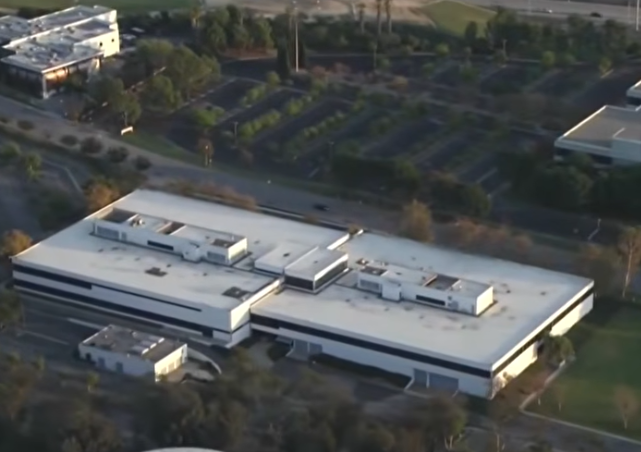
Data centers have had a rough couple of weeks.
Last week, Virginia issued a $2.5 million fine to a Microsoft data center for exceeding emissions limits last year.
The notice published online details an event in June of 2025 when the Microsoft facility in Leesburg, Virginia, reported a failure of an electrical substation and had to operate 62 emergency engines for a seven-day period, according to the Department of Environmental Quality. The state says the facility exceeded its permitted fuel emissions limits for pollutants including CO, VOC, PM10 and PM2.5 during that time.
As part of the settlement with Microsoft, the tech giant has agreed to invest $2.4 million toward an environmental project underway in Loudoun County, where the facility is located, to monitor air quality in the areas containing the highest concentration of data centers. The department says it plans to use the funds secured from the order to deploy dozens of air quality sensors around areas of the state with the highest concentration of data centers.
Virginia environmental officials ordered tech giant Microsoft on Monday to pay roughly $2.5 million after its Leesburg data center violated air quality standards during a week-long power grid outage in 2025, according to state documents.https://t.co/bEHrBo882a
— 7News DC (@7NewsDC) September 16, 2026
This week, New Jersey environmental officials fined a company linked to a $17 billion AI deal with Microsoft for operating 62 natural gas-powered generators without a permit.
In New Jersey, regulators observed natural gas power-generating equipment during an inspection of the site in Vineland on July 29. The power generators were not observed during the DEP’s last previous site inspection in December 2025.
The state’s Air Pollution Control Act requires facilities installing generators with 37-kilowatt capacity or higher to obtain a preconstruction permit and valid operating certificate. Natural gas generators emit carbon dioxide, nitrogen oxides, carbon monoxide and other combustion-related pollutants.
It’s not the first time the developers have come under fire for work on the data center. Last month, DataOne received stop-work notices after it began construction to make way for a liquefied natural gas tank and fuel cell units that had yet to receive approval from the city.
In a statement, DataOne said the natural gas-powered engines it received fines over were a temporary measure until the fuel cells from Bloom Energy it plans to install permanently are operational.
A Nebius data center in New Jersey has been hit with a massive fine for violating the state’s Air Pollution Control Act. https://t.co/vE7oV0q8rk pic.twitter.com/7m6F1Xrmmn
— FOX4 News Kansas City (@fox4kc) September 25, 2026
Finally, in Texas, Gov. Greg Abbott announced a halt on new data center development that requires state permits as officials review how the rapidly growing industry could impact local utilities and resources.
Abbott discussed the state’s response Tuesday during a campaign roundtable in Palestine, saying the Texas Commission on Environmental Quality will not issue permits for data centers while the state gathers more information.
“All data centers that need any type of permit are at an absolute halt until we get back all the information that we need through these water studies, through the power studies, to the air permit studies,” Abbott said.
Abbott said the state needs more information about how much water and electricity data centers are currently using and how much they expect to use in the future.
⚠️Read this #GTAlert titled “Texas Governor Directs a Halt on Data Center Permitting With State Agency Audits”:https://t.co/GOroJb4A0V. #TexasLaw #DigitialInfrastrcuture #DataCenters #ERCOT #EnergyInfrastructure pic.twitter.com/7pk8WdyefH
— Greenberg Traurig LLP (@GT_Law) September 25, 2026
Meanwhile, Texas Attorney General Ken Paxton has launched an investigation into data centers throughout Texas, focused on confirming their compliance with the Texas Water Development Board reporting requirements.
Paxton said he is investigating Texas data center developments that have not given a response to the Texas Water Development Board water use survey. Paxton’s orders say all data center developments in Texas must provide up-to-date and accurate information regarding water usage.
State law says the TWDB must conduct surveys of entities that use ground water and surface water for municipal, industrial, power generation, or mining purposes, according to Paxton’s news release.
Texas Attorney General Ken Paxton is investigating hundreds of data center developments over whether they’re complying with water-use reporting requirements https://t.co/6WfxKZ4qpH
— Bloomberg (@business) September 24, 2026
Environmental protection matters, but AI development should not be allowed to suffer death by 1,000 permits and 10,000 regulations… especially as the Chinese are linked so closely to environmental lawfare in this country.
Policymakers should enforce clear, science-based standards while gutting duplicative rules that delay investment, job creation, and technological progress. And as the environmentalists and their cult-based science have been in charge of promulgating these rules for decades, it would be well worth the effort to review current regulations to see how much they adhere to real science.
America needs a balanced approach that protects communities without regulating innovation out of existence.
It will be interesting to see which states find the proper balance between AI development and community needs over the next few years.
Donations tax deductible
to the full extent allowed by law.