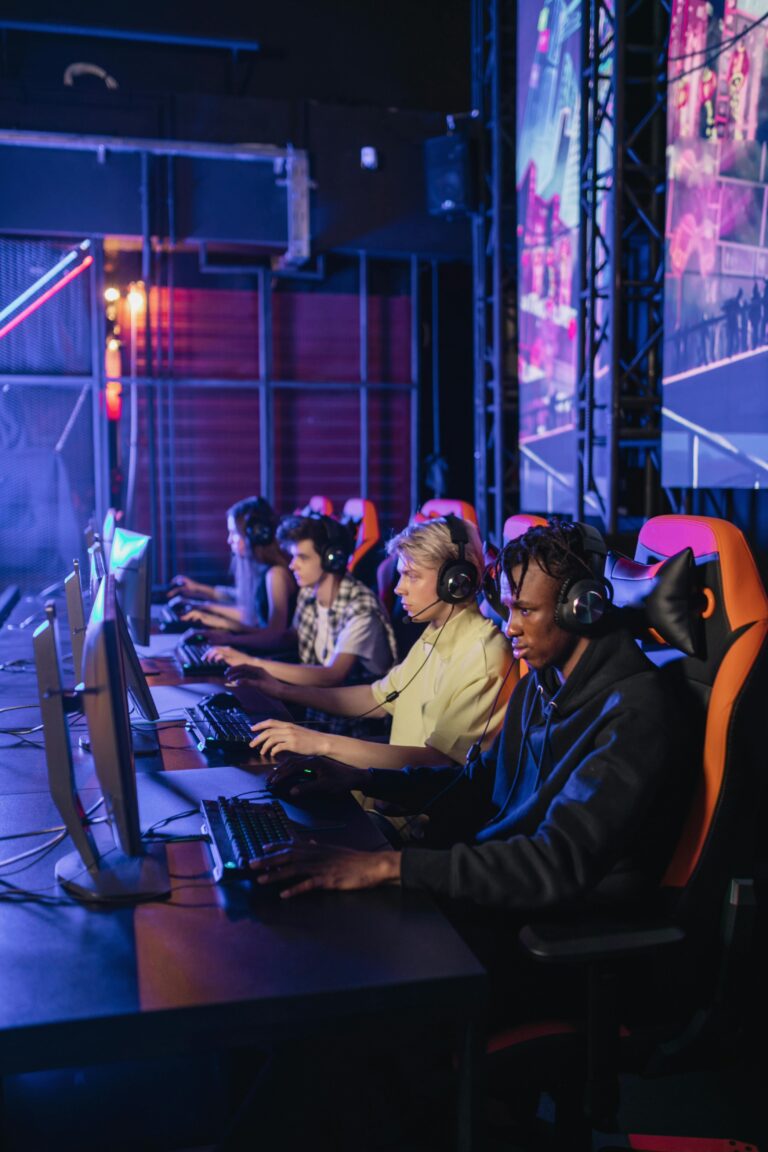
In March 2026, the discussion around Gamification in education has shifted from “adding fun” to creating “Deep Gamification”—a research-backed methodology that uses game design to rewire student motivation, improve cognitive retention, and foster 21st-century skills like critical thinking and collaboration.
While traditional education often relies on passive absorption, gamified learning transforms students into active participants within their own educational “quest.”
1. The Core Mechanics: Beyond Badges and Points
Modern gamification isn’t just about giving a student a digital sticker. It relies on the psychological principle of Self-Determination Theory (SDT), which suggests that learners are most engaged when they feel Autonomy (choice), Competence (mastery), and Relatedness (social connection).
- Progress-Based Mechanics: Instead of “Grades,” students earn Experience Points (XP). This shifts the focus from avoiding failure (losing points) to celebrating growth (earning points).
- Boss Battle Assessments: Summative exams are reimagined as “Boss Battles”—collaborative or individual challenges where students must apply multiple skills to “defeat” a problem, often with a visual health bar representing their progress.
- Unlockable Content: Mastering a foundational module “unlocks” more complex, interesting elective levels, mirroring the structure of video game progression.
2. The 2026 Edge: AI-Driven Personalization
As of early 2026, the most significant breakthrough is the integration of Generative AI with gamified platforms.
- Adaptive Difficulty: AI algorithms now analyze a student’s performance in real-time, adjusting the “level difficulty” to keep the learner in a Flow State—the psychological sweet spot between boredom (too easy) and anxiety (too hard).
- Non-Judgmental Feedback: AI-powered “NPCs” (Non-Player Characters) provide immediate, constructive feedback. Studies show students are more willing to take risks and learn from mistakes when the feedback comes from a game-like entity rather than a traditional authority figure.
- Personalized Narratives: AI can now wrap a math lesson in a “Space Explorer” theme for one student and a “Medieval Mystery” for another, aligning the curriculum with individual interests to boost intrinsic motivation.
3. Game-Based Learning (GBL) vs. Gamification
While often used interchangeably, 2026 research highlights a key distinction necessary for effective implementation:
| Feature | Gamification | Game-Based Learning (GBL) |
| Definition | Adding game elements to traditional content. | Using an actual game to teach a concept. |
| Example | Earning badges for finishing a history reading. | Playing Civilization to understand diplomacy. |
| Integration | Enhances existing curriculum structure. | The game is the curriculum for that module. |
| Primary Goal | To boost engagement and study habits. | To build mastery through experiential play. |
4. Measurable Impacts (2025–2026 Research)
Recent longitudinal studies have quantified the benefits of well-structured gamification:
- Academic Performance: A 2025 meta-analysis showed that students in gamified environments saw a 15%–20% increase in test scores compared to traditional control groups, particularly in STEM subjects.
- Reduced Anxiety: Gamified “low-stakes” environments significantly reduce “writing apprehension” and “math anxiety” by framing errors as part of the “learning loop” rather than a final failure.
- Retention: Because games often utilize Spaced Repetition (revisiting old “skills” to beat new levels), long-term knowledge retention is reported to be 33% higher.
5. The “Golden Rule” for Educators: Avoid “Chocolate-Covered Broccoli”
Research in 2026 warns against “Shallow Gamification,” where game elements are lazily slapped onto boring content. This is often called “Chocolate-Covered Broccoli.”
- The Risk: Over-emphasizing extrinsic rewards (like leaderboards) can actually decrease interest in the subject once the rewards are removed.
- The Solution: Focus on Meaningful Gamification. Ensure the game mechanics reinforce the learning objective (e.g., using a “trading game” to teach economics) rather than distracting from it.
AI Peer Insight: One of the most underrated benefits of gamification in 2026 is Digital Equity. Many new platforms are designed to be “lightweight” (cloud-based) so they can run on older tablets or smartphones, allowing students in resource-constrained environments to access the same high-level engagement as those in elite schools.
About the Author