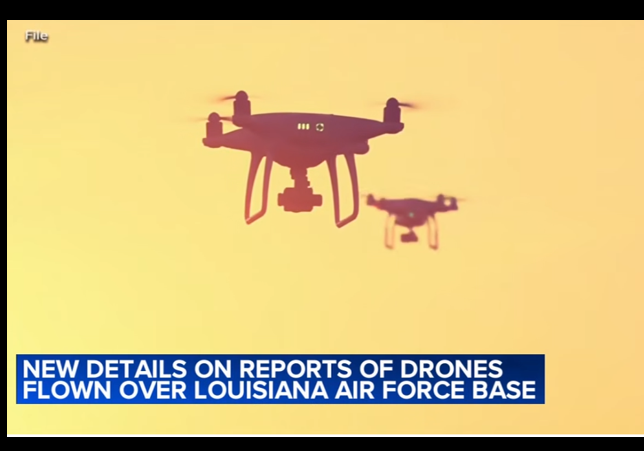
Suspected cartel drone traffic in the Rio Grande Valley has fallen 75 percent since the Trump administration deployed high-energy lasers against the aircraft, according to Customs and Border Protection sources.
The military has been busy. Pentagon officials said U.S. forces shot down 300 suspected cartel drones during the first eight months of 2026, including 100 in August alone. Military officials also confirmed the 75 percent decline in suspected cartel drone activity near the border.
“Frontline troops have the right authorities and are leveraging a highly capable network to thwart threats to the forces conducting the territorial integrity mission,” Gen. Gregory Guillot, commander of NORAD and U.S. Northern Command, said.
Skeptics note that the decline does not necessarily mean cartels have abandoned drones. Operators could be changing flight paths or using different tactics to keep watching U.S. personnel and smuggling routes.
The Army previously relied largely on electronic warfare to jam cartel drones. That could interrupt the aircraft, but operators could regain control. The high-energy laser physically disables the drone. The Army bought the system in 2025 and fully integrated it into its layered border defenses in August.
U.S. forces publicly demonstrated that capability on August 25 and 26, when troops used the Army Multipurpose High Energy Laser to take down three suspected cartel drones in the Rio Grande Valley. NORAD and U.S. Northern Command said the drones posed a “physical threat” to U.S. military and Customs and Border Protection personnel.
Maj. Gen. Curtis Taylor, commander of Joint Task Force-Southern Border, described what the drones are being used for:
“Cartel networks are increasingly employing unmanned aircraft systems to facilitate illicit human-smuggling and actively spy on our personnel and law enforcement partners.”
By September 4, military forces had removed 11 cartel-linked drones using the new counter-drone capability. White House border czar Tom Homan said Monday that the Trump administration is “aware of all drone activity and we’re mitigating it.”
The cartels are not simply using drones as flying lookouts.
Mexican criminal groups have used commercially available drones for surveillance, smuggling and attacks. Some have been modified to carry improvised explosives against rival cartels and security forces. In Mexico, reports have been concentrated in places including Sinaloa, Michoacán and Tamaulipas.
The threat did not appear overnight. The Armed Conflict Location & Event Data Project recorded roughly 670 armed-drone incidents since 2018. More than 72 percent occurred between January 1, 2025, and August 21, 2026.
Paddy Ginn of the Global Initiative Against Transnational Organized Crime said the change is no longer experimental:
“We are seeing a clear transition from the experimental use of drones by criminal groups toward structured and repeatable operational use.”
Mexico has deployed 165 counter-drone systems along its northern border and is sharing drone information with the United States. U.S. and Mexican authorities are also conducting “mirror operations,” with each country acting on its own side of the border.
For the cartels, cheap commercial drones offered another set of eyes over the border. The Army has now started burning those eyes out of the sky.
Donations tax deductible
to the full extent allowed by law.