The Commercial Mediation Conclave 2026, themed “Making Mediation Mainstream” and organised by The PACT and Poovaya & Co, was held on 18 September 2026 at the India International Centre, New Delhi. Among its sessions was a fireside chat titled “Trust in Mediation – Who is Responsible?”, moderated by Mr. Jonathan Rodrigues, Mediator and Partner, The PACT, with Ms. Anuradha Mukherjee, Partner, Cyril Amarchand Mangaldas, Dr. Aman Hingorani, Senior Advocate, Supreme Court of India, and Mr. Ajit Kumar Mishra, Director, Works, IRCON International Ltd. The conversation moved between the perspectives of a disputes lawyer, a mediator and trainer, and a government contracting authority, and returned repeatedly to the question of where responsibility for trust actually lies.
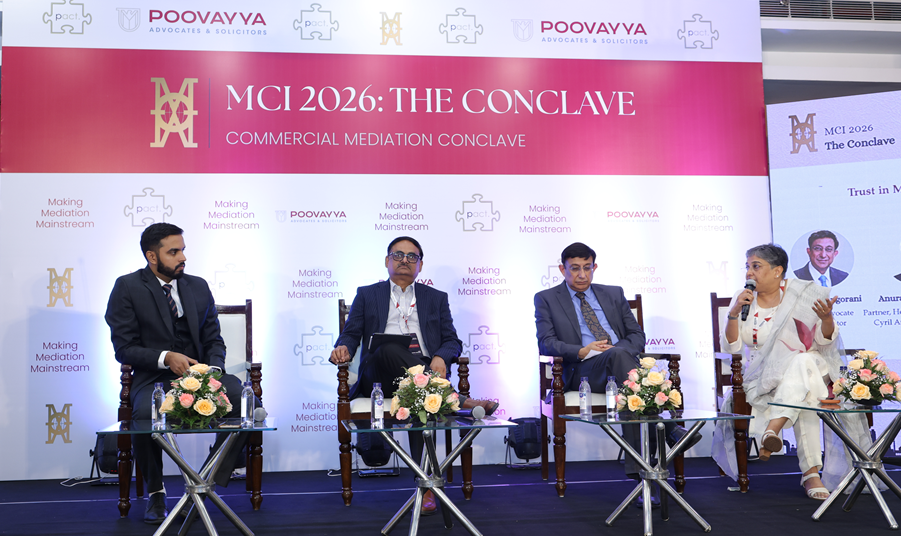
[In frame: Mr. Jonathan Rodrigues, Mr. Ajit Kumar Mishra, Dr. Aman Hingorani, and Ms. Anuradha Mukherjee]
Trust as trust in the process
Opening the discussion, Mr. Rodrigues observed that mediation is often taken for granted precisely because its selling points sound self evidently attractive. It is voluntary, confidential, the parties choose their own neutral, and they retain control over the outcome. Yet, he noted, this apparent common sense has not translated into widespread take up, and he put the question to the panel directly, asking whether the trust deficit lay in mediators themselves, in mediation as a process, in mediation institutions, or in the mediation settlement agreement that eventually results.
Ms. Anuradha Mukherjee answered that all of these ultimately reduce to trust in the process. She explained that the process encompasses the mediator, the time the mediator is prepared to commit, and the confidentiality of the exercise, and that parties enter mediation having given their consent but without the experience litigants bring to an adversarial hearing. Unlike arbitration, she said, parties in mediation come in cold, and it falls to the process itself to show them that it is fair, that their concerns will be heard, and that the mediator will set realistic expectations about the difference between what a party might obtain through an adversarial process and what it may ultimately settle for in mediation.
“It is the job of the mediator to inspire trust from the parties, towards the mediator and towards the process.”
Mr. Rodrigues suggested this pointed to a more specific problem, the absence of structure. He recalled that an earlier session at the conclave that day, in remarks attributed to Mr. Ajay Thomas, had observed that most mediation experience in India is unstructured, with mediators conducting several sessions back to back after lunch, working through tired and emotionally drained parties with no fixed sense of how the process would conclude.
Ms. Mukherjee agreed that certainty is often missing within a given mediation, but argued that a credible process compensates for this over time. Parties do not necessarily come to mediation only at the start of a dispute. They may enter mediation while litigation is already under way, at a stage when a party is recalibrating its position in a commercial matter, and even where an early attempt at mediation does not succeed, a party that found the process itself trustworthy is likely to return to it later, including midway through a trial.
A thirty-year dispute and the credibility of the process
Ms. Mukherjee illustrated this with a mediation she had been involved in through Samadhan, in which a family and commercial dispute dating back to the 1970s, and running to nearly thirty years of litigation among the same family members, was finally resolved. She described a mediator whose dedication to hearing every one of the several parties, over sessions that sometimes ran past nine in the evening, to the point that the Registrar of the High Court asked them to vacate the building, eventually brought the dispute to a close.
“So there is a process, but then that mediator had taken the process on himself to go that extra mile.”
Mr. Rodrigues linked the anecdote to what mediators sometimes call the satisfaction triangle, comprising psychological satisfaction, outcome satisfaction and process satisfaction, and observed that parties who have a good experience of the process, even without an immediate settlement, are more likely to return to mediation later.
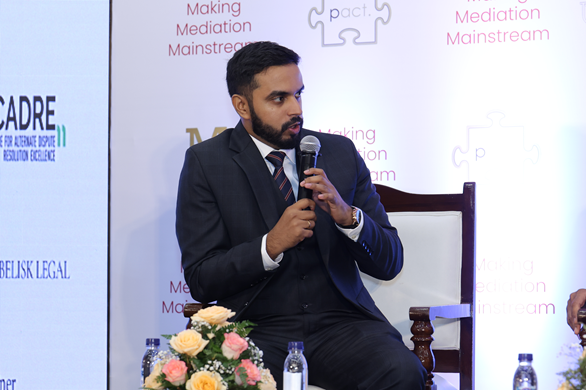
Government as litigant, and the fear of the audit
Turning to Mr. Ajit Kumar Mishra, who handles large government infrastructure contracts running into crores of rupees, Mr Rodrigues noted that an earlier conversation that day had suggested government officials were becoming more receptive to mediation where a clear protocol existed and settlement was institutionally encouraged.
Mr. Mishra agreed that government has historically been the largest litigant, and that mediation, unlike older informal settlement practices, arrived in a structured statutory form that was initially unfamiliar to government contracting. He located the trust problem at two levels: “The trust, first, is at the mediation table itself, among the parties, the mediator and the institution. The second trust is in the outcome, in whatever mediation settlement agreement we are having.”
The first level, he explained, is at the mediation table itself, among the parties, the mediator and the institution administering the process. The second, and in his account the more difficult one, concerns the outcome. Where government is a party, any settlement remains open to audit and scrutiny for years afterwards, and the official who agreed to it may have to defend the decision long after the fact.
He illustrated this with an example he suggested was close to the real experience of government officers. A contractor’s claim of ₹500 crore is settled at ₹200 crore. On its face this appears to be a sound commercial outcome, saving the government ₹300 crore. An auditor reviewing the file years later may instead ask why the claim was conceded at all, given that the government had argued throughout the life of the project that it owed the contractor nothing. Settling therefore invites the question of whether the ₹200 crore can be defended, not whether ₹300 crore was saved.
Mr. Mishra added that if a settlement required documentary justification for every rupee, in the way a court judgment does, it would in effect no longer be mediation but adjudication by another name. Parties settle in mediation precisely because they lack that kind of evidence for every element of their position, and because the outcome may serve a broader commercial or reputational interest that cannot easily be quantified.
He also described how authority is structured within government departments. An officer negotiating on behalf of the government has authority only up to a defined level, fixed by standard operating procedure. Beyond that level, the matter must go to a superior, who may in turn convene a committee. The eventual settlement therefore reflects a collective, reasoned judgment by several officers rather than the evidence based justification of a single figure, and Mr Mishra suggested that this collective process works better within a government system than one that expects the same evidentiary rigour as adjudication.
Mr. Rodrigues summarised the exchange as showing that, in a government context, the deficit of trust lies less in the mediation table itself than in the ability to execute and stand behind the eventual outcome.
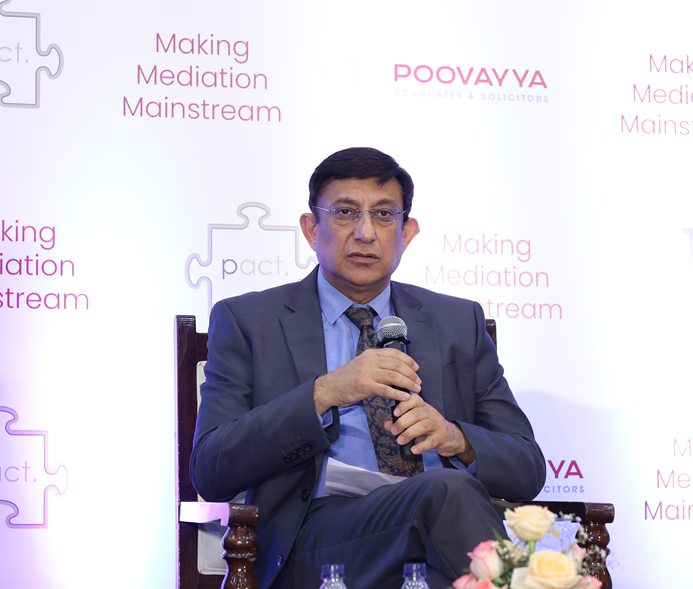
[in frame: Dr. Aman Hingorani]
The mediator’s responsibility to build trust in the process
Mr. Rodrigues then asked Dr. Aman Hingorani, drawing on his long experience as a trainer and mediator, at what point in a mediation he could tell that the parties had come to trust him.
Dr. Hingorani answered that inspiring trust, in the mediator and in the process, is the mediator’s own responsibility at every stage, from a pre-mediation analysis of the dispute, through the opening statement, which he described as a conversational roadmap for the parties, to private caucus sessions. He drew a careful distinction. It is not the mediator’s role to build trust between the parties themselves, who arrive with an existing conflict and are unlikely to expose their vulnerabilities to a third party on that basis. The mediator’s task is instead to build trust in the process, through even handedness, neutral conduct and consistent, careful use of language from the outset.
He also distinguished between disputes that are purely transactional, in his words a cold, bloody business decision, where a party simply wants to cut its losses and redeploy the money, and disputes that present as commercial but carry a strong emotional undercurrent, arising from a perceived slight, a broken relationship or a loss of face. In his view it is the mediator’s job to work through that emotional cycle and help the party move past it, whatever theoretical model of mediation is being followed, because in practice the outcome depends heavily on the individual mediator’s own skill.
Dr. Hingorani connected this to a mediator’s listening and reflective skills, and to the importance of parties feeling that the process, and the outcome, belong to them, which he said is what makes a settlement durable. He illustrated the range of outcomes mediation can produce, compared with the single binary result of litigation or arbitration, with an example of a mediation arising from the prosecution of a multinational company for using polythene bags under environmental protection legislation, which resolved with the government agreeing to drop the prosecution in exchange for a substantial contribution by the company to an environmental protection fund. He agreed with Mr. Mishra’s point about the reluctance of government officers to take responsibility for a settlement, observing that many would rather obtain an unfavourable court ruling and attribute the outcome to the court than take a personal position on whether to settle.
Changing an institutional mindset
Dr. Hingorani described training programmes he runs for government departments, public sector undertakings and banks, roughly twenty ongoing programmes aimed at senior officers, built around a simple proposition, that there is little reason to litigate a matter that can instead be resolved by direct engagement with the other side. He illustrated the scale of the mindset shift required with an anecdote about a general counsel of a large company, put to him three years earlier, who responded to a suggestion that the company introduce workplace mediation by saying that if any employee sued the company, the company would simply counter sue.
“If any of the employees sue us, we will just sue them back and we will ruin their lives.”
Dr. Hingorani recalled being sufficiently taken aback that he did not immediately know how to continue the conversation.
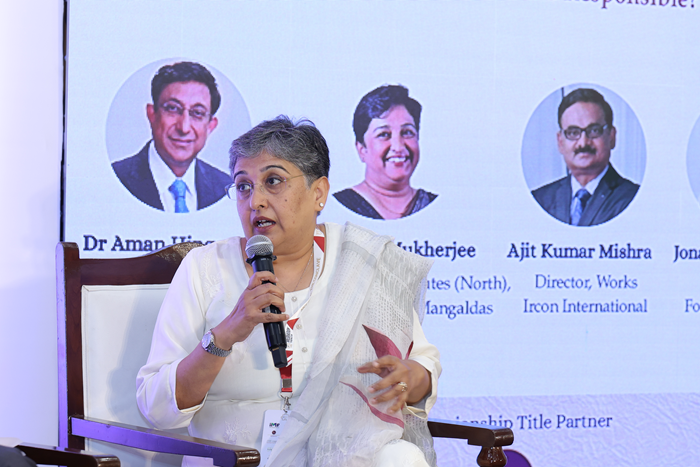
[In frame: Ms. Anuradha Mukherjee]
Choosing a mediator for a technical dispute
Returning to Ms. Mukherjee, Mr. Rodrigues asked what a disputes lawyer looks for when selecting a mediator, whether credentials, reputation, certification or accreditation, and, more pointedly, whether she would be comfortable choosing a mediator who is not a lawyer for a technical dispute.
Ms. Mukherjee said that in a high value commercial dispute with genuine technical content, clients generally prefer a mediator who understands the technical nuances involved, since trust depends not only on the mediator’s neutrality but on both parties feeling that their issues, however technical, have genuinely been understood. She also stressed the importance of a mediator who comes to the mediation properly prepared, rather than one hearing the dispute for the first time on the day.
She recalled a mediation between an Indian company and a Canadian company, both multinationals, where a reputed Canadian mediator gave the parties a date some six months out. Rather than treating this as a drawback, she described it as an advantage. The mediator allocated three dedicated days, required brief written statements of the issues in advance, and asked the parties to identify any experts whose evidence he might need to consider. In the intervening six months the parties prepared thoroughly, so that by the time they appeared before the mediator, both the parties and the mediator understood the subject matter, and the parties, having invested real time and money in the process, were more open to considering possibilities beyond their original claims. She contrasted this with a mediator who simply asks the lawyers to present the case on the day, where each side is still focused on advancing its own narrative rather than genuinely considering settlement, and where sessions can become protracted precisely because the mediator has not set aside sufficient time.
Mr. Rodrigues observed that Ms. Mukherjee’s account pointed to a distinction between merely appearing to listen and genuinely understanding a party’s position, noting that a client can generally tell the difference even where a mediator’s listening technique looks the same in both cases.
What an institutional client expects of a mediator
Mr. Rodrigues then asked Mr. Mishra, as someone who effectively occupies the position of the client within a government mediation, what mediators in India would need to do to earn his trust early enough in a dispute to be considered before the matter escalates.
Mr. Mishra set out three requirements. First, the mediator needs experience or knowledge of the subject matter of the dispute, to properly understand the nature of the case. Second, and in his view more important, the mediator needs to understand the institutional constraints under which a government party operates, such as the bureaucratic hurdles that distinguish a government department from a private party where a single individual can simply agree to a deal. Third, the mediator must demonstrate an understanding of the process itself and personal integrity, so that Mr. Mishra can trust the process as a whole.
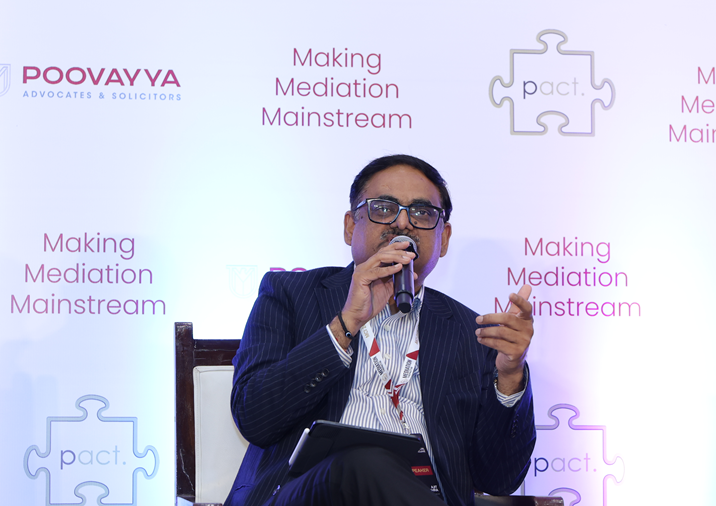
[In frame: Mr. Ajit Kumar Mishra]
Can trust be rebuilt once it has already broken down
Mr. Rodrigues put a broader question to Dr. Hingorani. By the time a dispute reaches mediation, the parties have typically already been asked to trust each other at the time of contracting, then to trust the litigation system once the dispute arose, and finally to trust the mediator and the mediation process itself. Given that trust has effectively already been asked for, and lost, several times over, he asked whether a mediator genuinely retains the capacity to build trust at that late stage, in the process, in the mediator personally, and among the parties themselves.
Dr. Hingorani reiterated his earlier distinction, that it is the mediator’s task to build trust in the mediator and in the process, not to manufacture trust between the parties themselves, adding that this remained his view after decades of practice as a court annexed mediator. He went on to recall his experience of mediating intellectual property disputes before returning to the question of the ethical limits on a mediator’s own competence.
Competence, disclosure and the limits of a mediator’s role
Dr. Hingorani said a mediator should not accept a case outside their subject matter expertise merely because they consider themselves a good listener, and described the practice of disclosing this to the parties at the outset, offering to step aside in favour of another mediator if the parties wish, while making clear that the parties’ own lawyers remain available to help identify and frame the issues.
He illustrated the point with a case he had co-mediated in Scotland through a mediation clinic, involving a medical negligence dispute. His co mediator, after a week of preparation, called him the day before the mediation was due to begin to say she could not continue.
“I’m not going to do this with you anymore, I have to back out.”
She explained that she had her own past experience of a medical negligence situation that the case had brought back to the surface, and that although she had believed she could work through it, she recognised the night before that she was not in a position to mediate impartially. The mediation had to be rescheduled with a new co-mediator. Dr. Hingorani used the episode to make a wider point, that had she not disclosed this and continued regardless, the parties would have been sitting before a mediator carrying an undisclosed bias, and it is exactly this kind of undisclosed conflict that erodes trust.
On the more technical requirements of a mediator’s work, Dr. Hingorani said that drafting a settlement agreement capable of being enforced as though it were a decree of a court is a legal skill that a mediator without legal training may not be equipped to provide.
“Who will do what, in how much time, in what manner. It has to be executed.”
He also described how the underlying dynamic of communication changes between an adversarial process and mediation. In an adversarial process, he said, direct communication between the parties dries up, each side retreating to its own lawyer, with a third party eventually deciding the matter, and the social and relational context of the dispute effectively set aside. Mediation, by contrast, restores that social context and requires the parties themselves to take the decision, which places a premium on the mediator’s own communication skills. He referred to the commonly cited estimate that the substantial majority of communication is conveyed through body language and tone, with only a small proportion carried by the words themselves, and argued that mediation is best understood as an interdisciplinary practice, drawing on behavioural science and psychology as much as on law, built on the rapport and goodwill a mediator is able to establish with the parties.
Mr. Rodrigues agreed with Dr. Hingorani’s characterisation of mediation as an interdisciplinary, ethically inflected practice, and observed that India has comparatively little debate about a multidisciplinary ethical code of conduct for mediators, noting that professional obligations, such as restrictions on soliciting work, that bind lawyers do not necessarily extend to other professionals who may also come to act as mediators.
Representing the weaker side
Taking a question from the floor, Mr. Rodrigues invited a member of the audience to speak. Part of the question was not clearly audible in the recording, but its substance, addressed to the panel’s disputes lawyers, was how counsel representing the weaker party in a dispute should approach a proposal to go to mediation.
Ms. Mukherjee said that, in her experience, the most effective time to attempt mediation is often not at the outset of a dispute, when the parties remain heavily invested in their positions, but somewhere in the middle of the process, whether shortly before trial, once documentary evidence has been exchanged, or when counsel is reviewing the evidence directly with the client. It is at that point, she said, that a realistic assessment of the strength and quality of the evidence tends to happen, and clients become more receptive to reconsidering their position, sometimes assisted by a degree of litigation fatigue built up over a long running dispute.
She rejected the idea that approaching the other side to explore settlement is a sign of weakness, a concern she said clients often raise directly, worrying that it might look as though they believe they are losing.
“I don’t believe there is a weakness in reaching out to the other side to say, can we talk?”
In her view, it is for the lawyer, rather than the mediator, who is not part of the client relationship in the same way, to judge what is genuinely in the client’s interest and to advise the client honestly when it may be time to reconsider its position, while making clear that if a settlement proves unsatisfactory, the client remains free to continue to litigate. She described this as an ongoing duty owed to the client throughout the life of the dispute, rather than a single decision taken at one point in time.
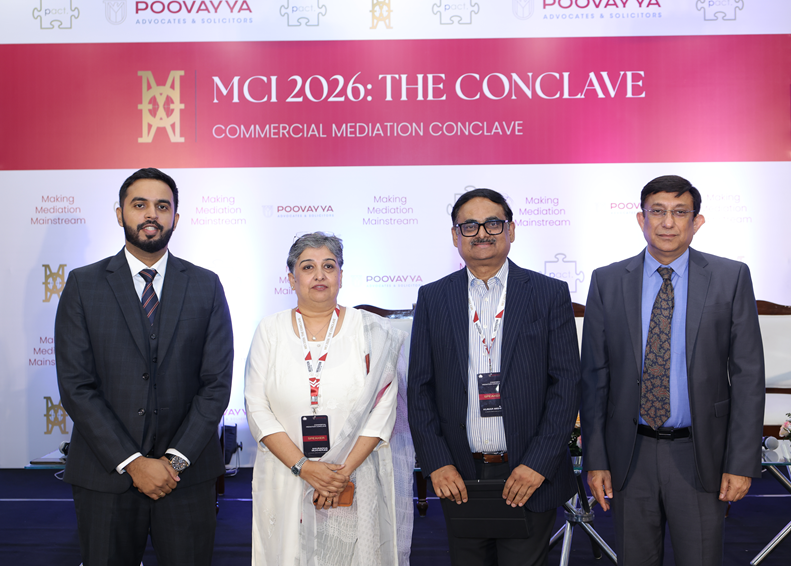
Closing Remarks
Bringing the session to a close, Mr. Rodrigues thanked the panellists for their time and their candour. The discussion left an ambivalent but consistent answer to its own title. Responsibility for trust in mediation did not settle on any single actor. Ms. Mukherjee located it substantially in the credibility of the process itself, sustained by mediators willing to invest the time a dispute genuinely requires. Dr. Hingorani placed it squarely on the mediator, whose conduct, competence and disclosure at every stage determine whether trust in the process, though not necessarily between the parties, can be established at all. Mr Mishra’s account suggested that for an institutional party such as government, trust depends as much on the ability to defend and execute an outcome after the fact as on anything that happens at the mediation table itself.