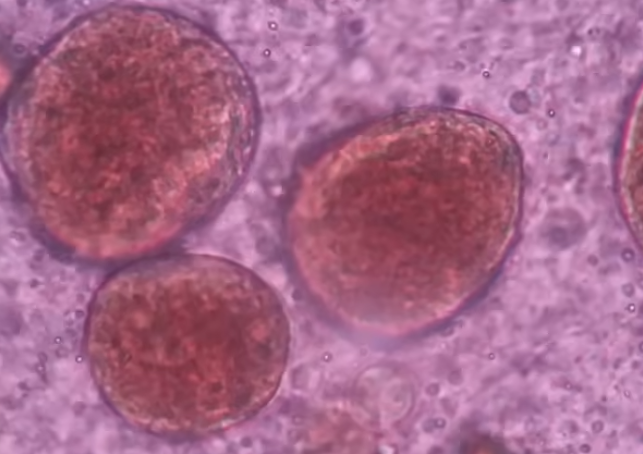
I have been tracking the “explosive diarrhea” parasite story since the early days of the summer surge, from its spread across multiple states to the emerging evidence pointing toward produce distributed through major national chains.
Highlights from the last few months include:
Now, federal officials say the iceberg-lettuce-linked outbreak is over, after nearly 13,000 reported cases across 21 states, more than 570 hospitalizations, and two deaths.
The Centers for Disease Control and Prevention said there is no longer a risk of people getting sick with cyclosporiasis from this outbreak and is confident that all related iceberg lettuce is off the market.
The U.S. Food and Drug Administration said that while the outbreak is over, it will continue its investigation of cyclospora infections linked to the iceberg lettuce sourced from central Mexico and recalled by Taylor Farms de Mexico.
“FDA will continue to work with federal, state, and international partners to complete its investigation and will provide updates as they become available,” the agency said on Friday.
Nearly 13,000 reported cyclospora cases were tied to the outbreak spanning 21 states, federal officials say. They represent the bulk of an unprecedented surge in the parasitic diarrheal illness this year. More than 570 people have been hospitalized and two died, according to the FDA and CDC, as of Friday.
The Cyclospora outbreak affecting 21 states linked to iceberg lettuce is now over. The recalled products linked to illness are past their shelf life and out of stores. Learn more about Cyclospora: https://t.co/uqRJZjKcqk pic.twitter.com/YsAyBOwJuY
— CDC (@CDCgov) September 11, 2026
This officially concludes the worst cyclosporiasis season in U.S. history, marked by 19,595 overall cases and likely many more unrecorded and being shrugged-off as a “24-hour flu bug”.
The foodborne illness spread sparked scrutiny of U.S. food safety procedures and corporate consolidation in the country’s food supply, along with staffing and funding at the U.S. Food and Drug Administration.
The outbreak also led to lower sales at restaurants that offer fresh lettuce — particularly Taco Bell, which served shredded iceberg lettuce from Taylor Farms — and dampened lettuce sales at grocery stores.
Cyclospora was challenging for health officials to track because of its long incubation period. It can take weeks to trace back the source of the illness, after which implicated produce may have spoiled.
Taylor Farms recalled the iceberg lettuce, including packages sold in grocers such as Walmart, in July. Taco Bell also pulled the lettuce from its restaurants that month.
The Cyclospora outbreak affecting 21 states linked to iceberg lettuce is now over. The recalled products linked to illness are past their shelf life and out of stores. Learn more about Cyclospora: https://t.co/uqRJZjKcqk pic.twitter.com/YsAyBOwJuY
— CDC (@CDCgov) September 11, 2026
Sadly, the response to the Cyclospora outbreak led to some unintended consequences. The penalty for skipping salads to avoid the fungus turns out to be…constipation.
Rather than expelling “pure water” nonstop, as many people with cyclosporiasis have reported, a growing number of people trying to avoid the infection are dealing with painful constipation.
“When you go from eating salads and fruit regularly to cutting it out completely, your fiber intake takes a significant hit and this can impact your bowel movements,” Dr. Rabia de Latour, a gastroenterologist who works with MiraLAX, told The Post.
That’s because fiber, when paired with enough water, gives stool the bulk and softness it needs to make a smooth exit.
“When you deprive your gastrointestinal tract of the fiber, this can result in constipation and harder, difficult to pass stools,” de Latour explained.
The No. 2 complication of the explosive diarrhea outbreak isn’t what we expected https://t.co/IZr5NrLrTy pic.twitter.com/9CdfMHZT5A
— New York Post (@nypost) September 3, 2026
Americans should not have to choose between risking an “explosive diarrhea” parasite and cutting healthy produce from their diets, then only to discover that the alternative comes with its own unpleasant consequences.
Let’s hope the FDA’s promised investigation produces more than more bureaucratic Kabuki theater, because next summer’s salad season will arrive soon enough.
Until then, let’s also hope that no awful pathogen infects our pumpkin crops.
In Morton, Illinois, home to the annual Pumpkin Festival, and site of the Libby’s factory responsible for 85 percent of the world’s canned pumpkin, Nancy Giles gets a taste of the local produce and finds out why, in Morton, orange is always in season. https://t.co/CvGQAiHZKl pic.twitter.com/mAvR1zV93g
— CBS Sunday Morning 🌞 (@CBSSunday) September 13, 2026
Donations tax deductible
to the full extent allowed by law.