The India Digital ADR Summit 2026, organised by the School of Law, Forensic Justice and Policy Studies, National Forensic Sciences University (NFSU), Gandhinagar, through the International Digital Dispute Resolution Centre (IDDRC), hosted a panel discussion on “The Enforcement Gap: Setting Aside, Recognition & Enforcement of Awards” during Day 2 of the summit at the NFSU campus in Gandhinagar, Gujarat.

[In picture from left to right: Ms Vishrutyi Sahni, Mr Devan Parikh, Mr Ratan Kumar Singh, Mr Sonal Kumar Singh and Mr Ronak Desai]
The discussion examined the difficulties that arise between the pronouncement of an arbitral award and its eventual enforcement. The panellists considered the limited role of courts in reviewing awards, the quality and expertise of arbitrators, frivolous challenges, the distinction between domestic and international arbitration, judicial correction and modification, patent illegality under Section 34(2A), Arbitration and Conciliation Act, 1996, and the need for specialised arbitration benches.
The panel comprised:
-
Mr Devan Parikh, Senior Advocate, High Court of Gujarat;
-
Mr Ratan Kumar Singh, Senior Advocate and Founding Chairman, Society of Construction Law, India;
-
Mr Sonal Kumar Singh, Senior Advocate and Fellow of the Chartered Institute of Arbitrators; and
-
Ms Vishrutyi Sahni, Partner, JSA Advocates and Solicitors, Delhi.
The session was moderated by Mr Ronak Desai, Managing Partner of International Construction Law Offices, Mumbai.
The enforcement gap begins after the award
Opening the discussion, Mr Ronak Desai referred to the observation that the difficulties faced by a litigant may begin after a decree has been obtained. Drawing a parallel with arbitration, he noted that an arbitral award, regardless of how carefully it is reasoned, has limited practical value unless the successful party can enforce it.
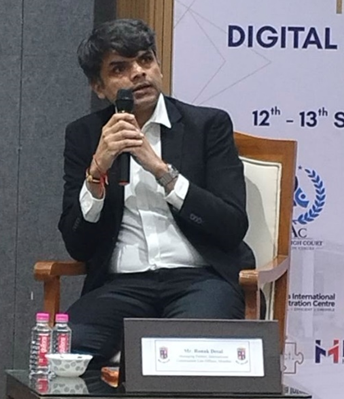
[In picture: Mr Ronak Desai]
He explained that the enforcement gap involves the legal and procedural challenges that arise after an award is pronounced, including applications to set aside awards and proceedings concerning the recognition and enforcement of awards across jurisdictions.
Mr Desai then asked why arbitral awards in India were so frequently challenged and whether the problem lay primarily with the courts or with the quality of arbitral awards.
Courts should exercise a limited supervisory role
Responding to the question, Mr Ratan Kumar Singh explained that arbitration is a private dispute-resolution mechanism in which parties voluntarily agree to be bound by the decision of an arbitral tribunal. He observed that, once parties had chosen arbitration instead of ordinary court proceedings, the role of courts should ordinarily remain limited. However, courts were required because arbitrators do not possess the power to enforce their own awards.
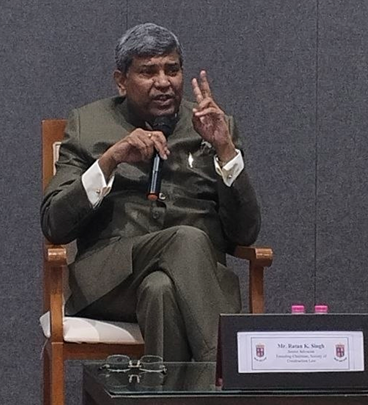
[In picture: Mr Ratan Kumar Singh]
According to Mr Ratan, judicial scrutiny is justified to ensure that the award was produced through a fair process. For instance, courts may need to intervene where a party was not given notice, where the arbitral process was procedurally unfair, where the arbitrator was ethically compromised or where the award was the result of collusion.
“And that is the limited role of the court. Should be limited role of the court.”
Mr Ratan contrasted the relatively low rate of successful challenges in several mature arbitration jurisdictions with the frequency of challenges in India. In his view, the problem could not be attributed entirely to the courts.
Quality of arbitral awards remains a major concern
Mr Ratan stated that, while courts may share some responsibility, a substantial part of the problem lay in the quality of arbitral awards. He identified the overburdening of arbitrators as one of the principal concerns. According to him, many arbitrators handle a large number of proceedings simultaneously, which affects their ability to read the record comprehensively, understand the dispute and remain in command of the arbitral process.
“Here we have arbitrators who have got hundreds of arbitrations on their table.”
He explained that awards were sometimes prepared in fragments over several months, resulting in inconsistencies, incomplete reasoning and a failure to address the real issues arising between the parties. Mr Ratan also emphasised that an arbitrator’s familiarity with arbitration procedure alone was insufficient. An arbitrator must possess an understanding of the substantive law and industry involved in the dispute.
Domain expertise is essential in construction arbitration
Mr Ratan particularly referred to construction, infrastructure, oil and gas disputes, which are often fact-intensive, document-heavy and technically complex. He noted that a significant proportion of substantial arbitrations in India relate to construction and infrastructure.
He observed that lawyers and arbitrators dealing with such disputes must understand how the relevant industry operates, the contractual relationships between employers, contractors and subcontractors, and the technical documents generated during a project. He also pointed out that construction law was not adequately taught in most law or engineering institutions.
“Unless arbitrator knows the first principles of delay analysis, what is delay?”
Mr Ratan explained that delay analysis requires an understanding of the distinction between critical and non-critical delay. For example, a delay in approving a drawing necessary for the construction of a subsequent floor may prevent the project from progressing, whereas a delay concerning a non-essential component may not affect the critical path.
He stated that the absence of such expertise could lead to awards that failed to properly address the dispute, thereby encouraging parties to challenge them. Mr Ratan also referred to the work of the Society of Construction Law, India, in promoting research, professional education and awareness concerning construction law and arbitration.
Frivolous challenges and the role of costs
Mr Sonal Kumar Singh highlighted the absence of sufficient consequences for parties that bring routine or frivolous challenges to arbitral awards.

[In picture: Mr Sonal Kumar Singh]
He observed that government entities and public-sector bodies involved in construction and infrastructure disputes may sometimes challenge awards as a matter of routine, particularly where there is little financial or procedural deterrence against doing so.
“If there is some definite effect, let me set an example, let’s see if it is a frivolous challenge and you will be penalised for any frivolous challenge that you bring before the court, I think that will also to some extent reduce the attitude of parties to try and challenge all the awards.”
Mr Sonal suggested that meaningful costs or other consequences for frivolous challenges could discourage parties from treating the challenge process as an automatic step following an adverse award.
Balancing finality and judicial supervision
Mr Devan Parikh examined the tension between the finality of arbitral awards and the need to ensure that parties receive justice.
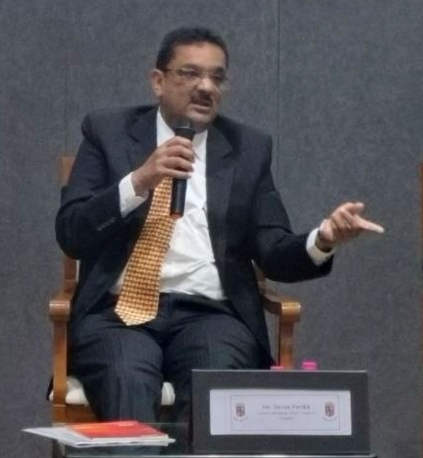
[In picture: Mr Devan Parikh]
He observed that arbitration is intended to provide an alternative to ordinary court proceedings. However, the legal framework must also account for situations where an award is considered unacceptable, particularly in the context of domestic arbitration. Mr Parikh explained that the Arbitration and Conciliation Act adopts a different approach towards domestic and international arbitration. In domestic arbitration, patent illegality is recognised as a ground for setting aside an award under Section 34(2A), Arbitration and Conciliation Act, whereas the scope of judicial review is narrower in the case of international commercial arbitration.
He stated that courts must be conscious of this distinction and avoid applying domestic standards mechanically to international awards. Mr Parikh also referred to differences in procedural and legal cultures across jurisdictions. What may constitute adequate procedural fairness in one jurisdiction may be assessed differently in another.
“While you are referring to arbitration you have to have justice not only done but seen to be done.”
According to him, a degree of judicial flexibility remains necessary in domestic arbitration, particularly while the Indian arbitration system continues to develop. At the same time, courts must maintain restraint in matters involving international arbitration.
Arbitration is intended to provide finality
Ms Vishrutyi Sahni emphasised that arbitration must be understood as an alternative to civil court litigation and not as another stage in a conventional appellate process.
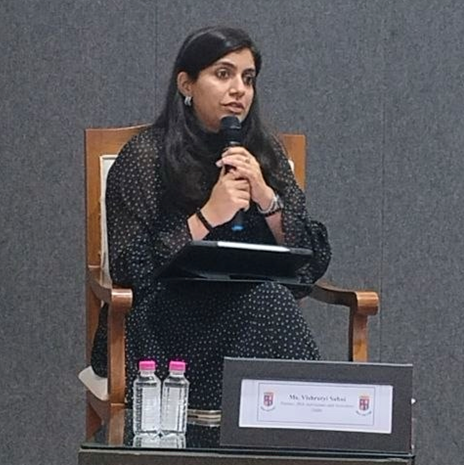
[In picture: Ms Vishrutyi Sahni]
She observed that Indian legal culture often treats an arbitral award as though it were a first-instance decision, followed by a first appeal, second appeal and proceedings before the Supreme Court. Such an approach, she stated, was contrary to the fundamental concept of arbitration.
“There is no concept of an appeal in arbitration. There is not supposed to be because an award is supposed to be final and binding.”
Ms Sahni explained that proceedings under Section 34, Arbitration and Conciliation Act are not appeals on the merits. Courts exercise supervisory jurisdiction for limited purposes, including circumstances involving patent illegality or public policy, where applicable. She also highlighted the role of arbitral institutions in strengthening the finality of awards. Several institutions scrutinise awards before they are issued, not to substitute their views for those of the tribunal but to identify typographical, factual or other critical errors at an early stage. According to Ms Sahni, such institutional scrutiny can prevent unnecessary subsequent litigation and improve confidence in the arbitral process.
She stated that the enforcement gap was not merely a matter of statutory reform but also a question of mindset among parties, lawyers and counsel.
“There was supposed to have an element of finality and I think that is what is one of the most critical issues is the mindset of parties, mindset of lawyers, parties, counsels to bring out the finality that comes with an award.”
Cross-border enforcement and conflicting judicial approaches
Mr Ratan referred to a cross-border construction dispute involving an Indian contractor and the Ethiopian Road Authority in SEW Infrastructure Ltd. v. Federal Democratic Republic of Ethiopia, 2023 SCC OnLine TS 609, to illustrate the difficulties that can arise when courts in different jurisdictions issue conflicting orders concerning the same subject matter.
The dispute involved performance and advance bank guarantees issued in connection with a highway construction project in Ethiopia. The project was subject to the International Chamber of Commerce (ICC) arbitration seated in Paris.
Before the bank guarantees were invoked, the Indian contractor approached the Telangana High Court under Section 9, Arbitration and Conciliation Act, seeking restraint against the Ethiopian authority and the banks. Although the Indian court passed an order of restraint, the Ethiopian bank proceeded in accordance with Ethiopian law and stated that it was not bound by the Indian court’s order. The ICC tribunal subsequently upheld the invocation and encashment of the bank guarantees. Proceedings concerning the award continued in France, where the award was upheld by the relevant courts.
At the same time, proceedings concerning the bank guarantees continued in India through repeated applications and appeals. Mr Ratan stated that the example demonstrated the importance of judicial expertise in commercial transactions, banking arrangements and arbitration law. He emphasised that judges dealing with arbitration matters must understand the commercial context of the disputes before them.
“You also need to have judges who have got commercial understanding of commercial world of arbitration and consistency in the precedent and the case laws can only come if you have judges sitting in courts who are well versed with the law with which they are dealing.”
Need for specialised arbitration benches
Mr Ratan also highlighted the inconsistent interpretation of arbitration provisions by different courts and benches. He observed that the same statutory provision could be applied differently depending on the judge hearing the matter.
He referred to the need for judges with specialised training and domain expertise in arbitration. He noted that certain High Courts, including the Delhi High Court and the Bombay High Court, had taken steps towards establishing specialised arbitration benches.
“We need to have people who know the subject, have domain expertise as lawyers, as arbitrators and as judges. Then you can have predictability, consistency and then this is how it can mature.”
The moderator, Mr Ronak Desai, referred to the United Kingdom’s Technology and Construction Court as an example of a specialised forum dealing with technically complex disputes.
He explained that the court developed from the historical practice of referring technical questions to specialised referees. Over time, the importance of technical expertise in construction disputes led to the development of a dedicated court dealing with technology and construction matters. Mr Desai noted that similar specialised mechanisms could assist in resolving construction and infrastructure disputes in India.
Judicial correction and modification of awards
The panel then discussed the distinction between judicial correction and judicial modification, particularly in the context of the Supreme Court’s decision in Gayatri Balasamy v. ISG Novasoft Technologies Ltd., (2025) 7 SCC 1.
Ms Sahni explained that correction is permissible where the court gives effect to a decision that has already been made by the arbitral tribunal or addresses an issue necessary to make the award enforceable.
“Correction ends the moment the court has to decide something afresh. If the court is only doing something to give effect to a decision that the tribunal has already made or intended by entering that award, that is correction.”
She distinguished this from modification, which occurs when the court supplies a decision on an issue that was not decided by the tribunal.
“Modification is when the court steps in and becomes the tribunal and starts deciding issues that the tribunal never decided or the court was never supposed to decide.”
Ms Sahni stated that Gayatri Balasamy was intended to facilitate correction to ensure finality and enforcement, rather than authorise courts to re-decide disputes.
Mr Parikh broadly agreed with this distinction but offered a different perspective on the scope of permissible modification. He suggested that, in certain circumstances, a court may be able to modify the relief granted if the reasoning of the award itself clearly demonstrated what ought to have been granted. He nevertheless emphasised that such intervention should not permit the court to reappreciate the evidence or substitute its own reasoning for that of the tribunal.
Contours of patent illegality under Section 34(2A)
The discussion then turned to the scope of patent illegality under Section 34(2A), Arbitration and Conciliation Act.
Mr Sonal explained that the provision permits a domestic award to be set aside on the ground of patent illegality appearing on the face of the award. However, the statutory provision expressly clarifies that the court cannot reappreciate evidence merely because it takes a different view from the arbitral tribunal.
He referred to the development of the law from Renusagar Power Co. Ltd. v. General Electric Co., 1994 Supp (1) SCC 644, through subsequent decisions that expanded the discussion concerning patent illegality, leading to the legislative introduction of Section 34(2A), Arbitration and Conciliation Act in 2015.
Mr Sonal identified circumstances that may fall within the scope of patent illegality, including:
-
An award contrary to the terms of the contract;
-
A perverse interpretation of contractual provisions;
-
An award based on no evidence;
-
Ignoring vital evidence that goes to the root of the decision; and
-
Absence of reasoning or legally inadequate reasoning.
He emphasised that an erroneous but plausible interpretation would not ordinarily justify judicial interference.
“If an arbitrator makes a view which may appear to be incorrect but it is a possible or a plausible view, then the court cannot interfere.”
Mr Sonal also noted that the interpretation of patent illegality was complicated by the volume of arbitration matters before Indian courts. Unlike smaller jurisdictions such as Singapore, Indian commercial courts and High Courts deal with a very large number of arbitration-related proceedings. He stated that the development of consistency would require judicial training, specialised benches and a more uniform understanding of the statutory framework.
Patent illegality must not become a substitute for appeal
Ms Sahni cautioned against the misuse of patent illegality as a means of indirectly appealing an arbitral award.
She referred to a recent dispute involving NTPC Ltd. v. Jindal ITF Ltd., 2025 SCC OnLine Del 511, in which a substantial award arising from a construction-related dispute had been challenged on the ground of patent illegality. She noted that the matter illustrated the consequences of prolonged proceedings and the uncertainty that can arise when the scope of patent illegality remains contested.
Ms Sahni stated that the ground was intended to operate within a narrow statutory framework and should not be expanded to dilute the finality of arbitral awards.
“It is us creative lawyers who try to put everything within the large phraseology of patent illegality and try and convince a lot of judges that it is patently illegal and therefore takes away or dilutes the finality of awards.”
Mr Parikh acknowledged the risk of misuse but stated that patent illegality continued to serve an important function in the Indian context, particularly given the developing nature of domestic arbitration. He observed that completely eliminating the ground at the present stage could undermine confidence in the arbitration process where an award was manifestly unacceptable.
“I would believe that it is so essential to have it at this stage to let there be confidence in the process.”
Mr Sonal agreed that patent illegality remained relevant in India, particularly until the quality of arbitral awards and institutional arbitration improved. He suggested that the solution lay in judicial training and disciplined application of the statutory threshold.
Ms Sahni clarified that her concern was not with the legitimate use of patent illegality, but with its abuse.
“I think what I was saying was that it is abuse that I am concerned with. Not the use.”
Mr Sonal concluded that the different components of the arbitration ecosystem were interconnected. Institutional arbitration, trained arbitrators, better-quality awards and specialised courts would collectively reduce the scope for unnecessary challenges and judicial interference.
Stay of enforcement and conditions of deposit
The panel also considered the issue of stay of enforcement under Section 36(3), Arbitration and Conciliation Act, particularly the conditions that courts may impose while granting a stay.
Mr Sonal explained that, following the 2015 amendment, the filing of a challenge to an award no longer automatically operates as a stay of enforcement. A party must seek a stay and demonstrate the basis for preventing enforcement. He noted that courts have adopted varying approaches regarding the conditions to be imposed. In some cases, courts have required the deposit of a percentage of the awarded amount, while in others they have accepted undertakings or security.
Mr Sonal identified two concerns:
-
The absence of a uniform approach regarding the amount or form of deposit; and
-
The tendency to confuse the purpose of a condition under Section 36(3), Arbitration and Conciliation Act with the provision of security under Section 9, Arbitration and Conciliation Act.
He stated that the purpose of a condition under Section 36(3), Arbitration and Conciliation Act should be to make the awarded amount available to the successful party, rather than merely secure the award.
Mr Parikh expressed reservations about prescribing a uniform percentage of deposit. He suggested that, in principle, the successful party should be entitled to receive the full amount awarded, subject to limited judicial intervention where the circumstances justify it.
Interim relief after an award
The moderator also asked whether a losing party could seek interim protection under Section 9, Arbitration and Conciliation Act after an award had been rendered but before enforcement.
Ms Sahni stated that such relief could be sought in appropriate circumstances. She explained that the relevant statutory language refers to a “party” and does not limit the remedy exclusively to the successful party.
However, she emphasised that the general principle should remain that the successful party is entitled to the benefit of the award. Intervention should be treated as an exception, justified only where the losing party demonstrates a legally recognised basis for such relief.
According to Ms Sahni, the central question was not merely whether a losing party had access to a remedy, but whether that party was entitled to prevent the successful party from obtaining the relief granted by the arbitral tribunal.
No single global model for enforcement
Mr Parikh observed that there was no single uniform approach to arbitration appeals, review and enforcement across jurisdictions.
He referred to differences between countries such as the United Kingdom, New Zealand, Australia, Canada, the United States, France and Germany. While some jurisdictions permit limited appeals on questions of law, others do not provide for an appeal but recognise certain forms of review or supervisory intervention.
He also explained that jurisdictions differ in their interpretation of public policy and procedural fairness when dealing with international awards. Some countries apply international public policy, while others may give greater importance to domestic procedural standards.
Mr Parikh stated that Indian courts must remain sensitive to the distinction between domestic and foreign awards and avoid refusing enforcement merely because a foreign tribunal has approached a contractual or procedural issue differently from how an Indian court might have approached it.
“Unless as a system, so far as enforcement of an international award is concerned, we are sensitive to these differences, we will keep on interfering and that will give India a bad name.”
Closing remarks
The panel discussion highlighted that bridging India’s arbitration enforcement gap requires more than legislative amendments. It requires improvements in the quality of arbitral awards, greater institutionalisation, specialised expertise, judicial consistency and a shift in the way parties and practitioners approach arbitration.
The panellists identified several priorities, including:
-
Improving the quality and reasoning of arbitral awards;
-
Reducing the workload of arbitrators;
-
Encouraging domain expertise in construction and other specialised disputes;
-
Discouraging frivolous challenges through meaningful costs;
-
Developing specialised arbitration benches and courts;
-
Ensuring consistency in the interpretation of Sections 34 and 36, Arbitration and Conciliation Act;
-
Preventing patent illegality from becoming a substitute for an appeal;
-
Strengthening institutional arbitration; and
-
Making enforcement more predictable, efficient and commercially effective.
The discussion underscored that the success of arbitration must ultimately be measured not merely by the issuance of an award, but by whether the successful party can obtain the money or relief awarded within a reasonable and predictable period.
Read more about India Digital ADR Summit 2026: