The first day of the India Digital ADR Summit 2026, being held at the National Forensic Sciences University (NFSU), Gandhinagar, featured a keynote address by Justice Sonia Gokani, former Chief Justice of the High Court of Gujarat, on “Mediation after the Mediation Act, 2023: From Statutory Framework to Institutional Practice.” Drawing on Indian and international developments, Justice Sonia Gokani examined how mediation is evolving from a largely voluntary and court-referred process into a more structured institutional mechanism, and identified the steps needed to strengthen its implementation in India.
Justice Sonia Gokani connects mediation with the search for peace
Beginning her address with Mahatma Gandhi’s exhortation, “Be the change you wish to see,” Justice Sonia Gokani reflected on the continuing prevalence of conflict and social division. She referred to the conflicts being reported across the world and to divisions based on race, caste, religion and regionalism. Amid such disputes, she said, people naturally begin to ask where humanity and peace can be found. It was this search for peace, she observed, that had drawn her to mediation.
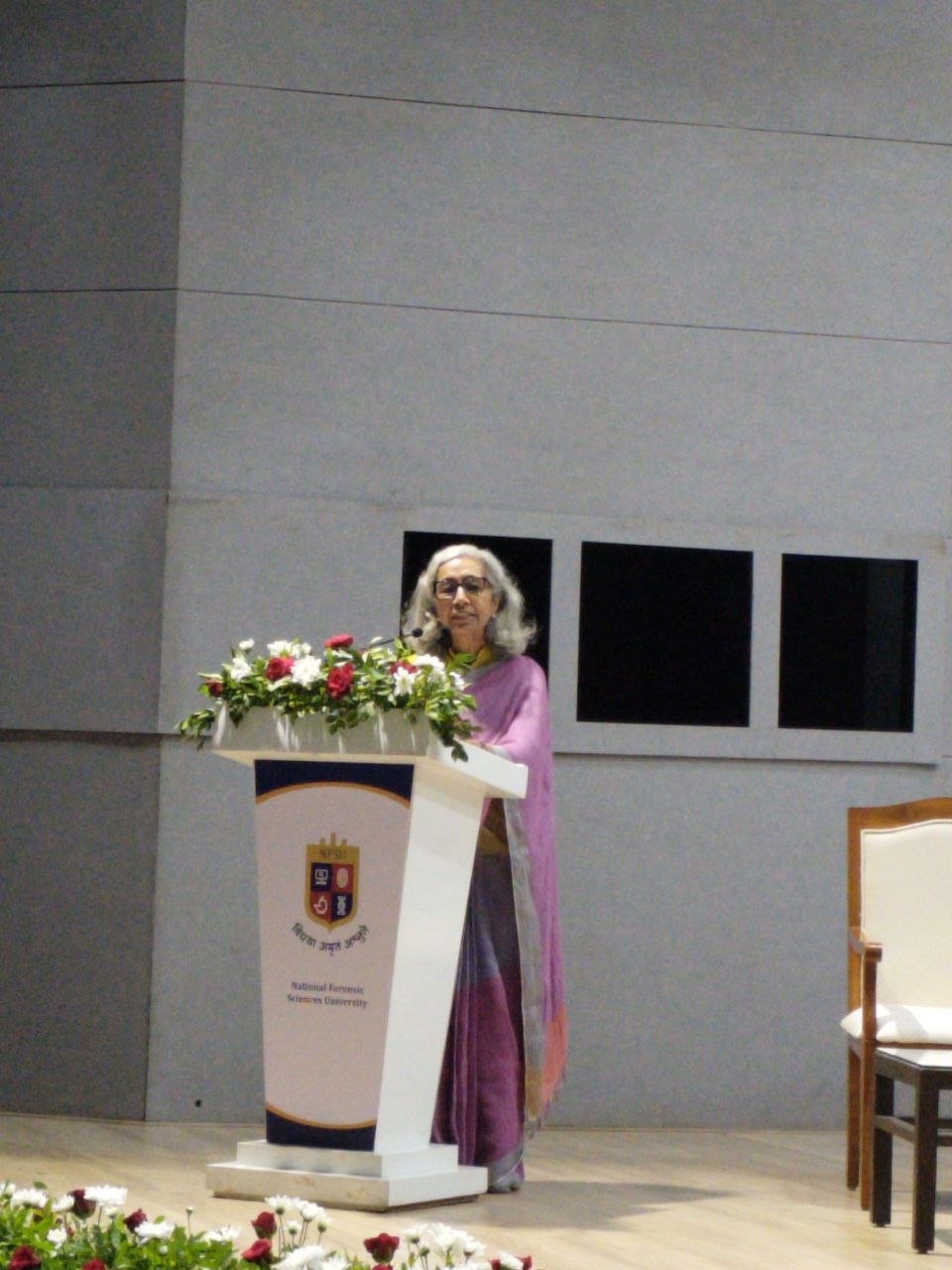
She congratulated NFSU and the contributors to the Summit for creating a platform where different aspects of alternative dispute resolution could be discussed. She then introduced a lesson from the Mahabharata, focusing not on the familiar story of Krishna’s mediation at Hastinapur itself, but on the manner in which Krishna approached the parties.
When Duryodhana offered Krishna accommodation at his palace, Krishna declined and instead stayed at Vidura’s residence. Justice Sonia Gokani highlighted this as an example of maintaining neutrality while building rapport with those involved. She then pointed to Krishna’s decision to reduce the demand from the entire kingdom to five villages. Even when that proposal was rejected, Krishna did not allow the disagreement to become an issue of personal ego or hostility.
Justice Sonia Gokani presented these features of Krishna’s approach as relevant lessons for those considering mediation as a profession, particularly the importance of neutrality, rapport and a willingness to reframe demands rather than allowing positions to harden.
International mediation moves towards wider recognition and specialised models
Justice Sonia Gokani next turned to the international development of mediation. She referred to the Singapore Convention on Mediation1, noting that India has signed the Convention but has not yet ratified it. She explained that the Convention provides for direct cross-border enforcement of mediated commercial settlement agreements and seeks to place mediation on an equal footing with international arbitration under the New York Convention2.
She also pointed to the growing use of commercial mediation across institutions. Referring to figures from the Centre for Effective Dispute Resolution (CEDR), the World Intellectual Property Organization (WIPO) and the Singapore International Mediation Centre (SIMC), she cited settlement rates of 92% for CEDR and around 70% for WIPO and SIMC.
Alongside these developments, Justice Sonia Gokani noted that mediation itself was becoming more specialised and increasingly integrated with other dispute resolution processes. She referred to hybrid and multi-tier frameworks involving combinations such as mediation-arbitration, arbitration-mediation, early neutral evaluation and expert determination. She also highlighted the emergence of “deal mediation” during commercial negotiations, particularly for complex licensing terms, and project-based mediation in high-value commercial disputes. In such matters, she said, mediation was increasingly evolving from a single-day process into a multi-stage exercise managed over several weeks.
She further referred to the English decision in James Churchill v. Merthyr Tydfil County Borough Council3, noting that the courts had recognised the possibility of requiring parties to participate in alternative dispute resolution before litigation, provided that such a requirement was proportionate and did not infringe the right to a fair trial.
Mediation Act, 2023 seeks to give greater structure to the process
Against this international backdrop, Justice Sonia Gokani turned to India’s growing commercial activity and the resulting need for effective mechanisms to manage commercial disputes. She placed particular emphasis on the concept of ownership in mediation.
Unlike an adjudicatory process in which the outcome is imposed upon the parties, mediation allows disputants to determine how they wish to engage with the process and what resolution they are willing to accept. Justice Sonia Gokani said that once parties participate in deciding the outcome, they develop a sense of ownership over it and are therefore more likely to respect the resolution.
She contrasted this with her earlier experience of court-referred mediation. Parties would sometimes agree to attempt mediation but could subsequently walk away because there was no binding framework keeping them within the process. In her view, the Mediation Act, 2023 creates the possibility of a significant change in that position.
Justice Sonia Gokani described the Act as a landmark development establishing a standalone legislative framework for domestic and international commercial mediation. She referred to the statutory timeline of 120 days, extendable by a further 60 days, as well as provisions concerning confidentiality, enforceability of settlement agreements and community mediation.
She also referred to the August 27, 2026 notification4 of the Ministry of Law and Justice establishing the Mediation Council of India under Section 31(1) of the Act, with its headquarters in Delhi. She explained that the Council would regulate mediation service providers, frame accreditation standards and oversee the national mediation ecosystem. She further referred to Section 43, concerning community mediation for disputes likely to affect the peace, harmony and tranquillity of residents and families.
Also Read: Mediation Council of India Established in Delhi | SCC Times
Institutional capacity and mediator training will determine implementation
Justice Sonia Gokani emphasised that legislation alone would not be sufficient to establish a strong mediation ecosystem. She pointed to the continuing involvement of the Central Government, the Supreme Court, the National Legal Services Authority (NALSA) and High Courts in building mediation infrastructure and training mediators. She noted that several High Courts had established mediation centres and referred particularly to the Mediation and Conciliation Project Committee of the Supreme Court of India, which has been involved in training lawyers to become trained mediators.
She also referred to NALSA’s collaboration with the International Academy of Mediators for advanced commercial mediation training programmes at the Supreme Court in 2024 and 2025.
In discussing the development of the statutory framework, Justice Sonia Gokani acknowledged Niranjan Bhat and his contribution as Chairperson5 involved in the drafting of the legislation. Recalling her own professional experience, she said that she and others had undergone mediation training with him after his return from the United States.
She then highlighted developments in Gujarat. According to Justice Sonia Gokani, mediators associated with the Gujarat High Court, including senior advocates and other relatively senior practitioners, had volunteered to undertake mediation work on a pro bono basis. She described the initiative as a significant one and said that it had produced positive results.
Justice Sonia Gokani also referred to the Gujarat State Legal Services Authority framework and the mediation mechanisms operating through the civil procedure system. She noted that, despite provisions encouraging or requiring mediation in certain categories of disputes, including commercial litigation, parties did not always choose to pursue mediation. This, she suggested, made capacity-building, public awareness and greater understanding among lawyers essential to increasing the use of mediation.
For her, the effectiveness of the statutory framework would ultimately depend on whether practitioners and litigants became genuinely convinced of the value of mediation. Once that confidence developed, she said, mediation could be pursued more consistently as an effective ADR mechanism.
Justice Sonia Gokani identifies priorities for the next phase
Looking ahead, Justice Sonia Gokani identified the operationalisation of the Mediation Council of India as an important next step. She called for accelerated drafting of regulations to standardise mediator accreditation, certify mediation service providers and establish ethical standards across jurisdictions.
She also stressed the need to strengthen institutional capacity. Referring to the recommendations of the 165th Parliamentary Standing Committee Report6, she spoke of expanding infrastructure, workforce and international panels at institutions such as the India International Arbitration Centre and Delhi International Arbitration Centre. She further suggested institutional memoranda of understanding between ADR centres and major industry bodies and Central Public Sector Undertakings to promote institutional ADR.
Justice Sonia Gokani advocated a shift from a focus on the number of referrals to the integrity of the mediation process itself. This, she said, would require further professionalisation of mediators, including certified supervising mediator panels and specialised panels for areas such as intellectual property, life sciences, construction and information technology disputes. She referred to the WIPO ADR model in life sciences as an example of such sectoral specialisation.
The growing use of technology also formed part of this forward-looking discussion. Justice Sonia Gokani called for the integration of AI with human governance, particularly in light of the wider discussions at the Summit concerning the role of human judgment in technology-assisted dispute resolution. She also emphasised the importance of strengthening legal education and creating greater public awareness of mediation.
Challenges include mediator empowerment and community mediation
Justice Sonia Gokani identified several issues that would require closer attention as the Mediation Act is implemented. These include the appointment and empowerment of mediators under the Act, the non-binding nature of community settlements and India’s position on the Singapore Convention despite being a signatory.
She also stressed that the professional preparation of mediators should extend beyond technical knowledge. Mediators, she said, require soft skills as well: the ability to coordinate with colleagues, appropriate mannerisms in dealing with people, a positive attitude towards learning, perseverance and a willingness to assist others. These qualities, she observed, could determine whether a person becomes an asset to the ADR mechanism.
Buddha’s Rohini River story illustrates the mediator’s role
Justice Sonia Gokani concluded her address with the story of the Rohini River dispute between the Shakya and Koliya clans. During the summer, the river had dried up, leading to a dispute among farmers over the available water. What began as an argument escalated into a larger confrontation, eventually involving soldiers, ministers and the kings.
When Buddha arrived, he did not resolve the dispute by preaching to those gathered. Instead, he asked questions. He first sought to establish what the disagreement was actually about and gradually traced it back to the scarcity of water. He then asked the parties to consider the relative value of the water, the land and, ultimately, the lives of the soldiers, kings and princes that were being placed at risk.
The parties were thereby brought to recognise the disproportion between what they were fighting over and what they stood to lose. For Justice Sonia Gokani, the story captured the essence of mediation: identifying the real dispute, asking the right questions, maintaining neutrality and enabling parties to recognise for themselves what they stand to lose through continued conflict.
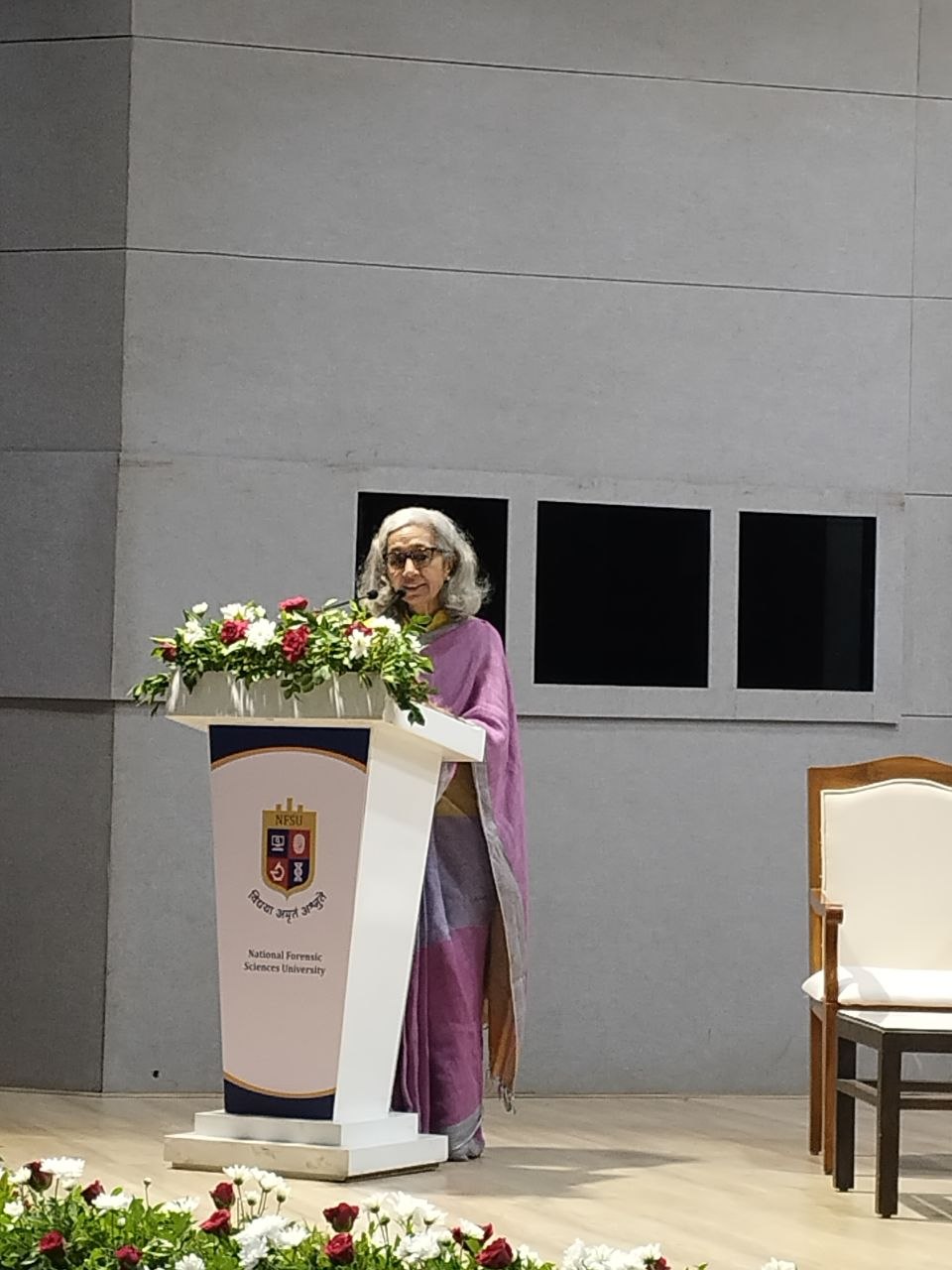
Drawing the story back to the work being undertaken at NFSU, Justice Sonia Gokani expressed confidence that the institution’s efforts to create a world-class ADR platform would continue to grow. She concluded with a saying underscoring the importance of beginning the work and nurturing it with commitment:
“आकाश तो बरसेगा, आज नहीं तो कल।
परसों नहीं तो बरसों।
बीज बोना तो चाहिए।
मिट्टी से स्नेह होना तो चाहिए।”
Her closing metaphor emphasised that institutional development may take time, but the process must begin by sowing the seed and cultivating the commitment necessary for it to grow.
Overall, the keynote presented the Mediation Act, 2023 not as the endpoint of India’s mediation journey, but as the statutory foundation for a much larger institutional ecosystem. The next stage, as outlined by Justice Sonia Gokani, lies in professional accreditation, specialised mediation services, institutional capacity, public and professional awareness, technology under human supervision, and a mediation culture built around neutrality, participation and party ownership.
1. United Nations Convention on International Settlement Agreements Resulting from Mediation (New York, 2018) also known as the “Singapore Convention on Mediation”
2. Convention on the Recognition and Enforcement of Foreign Arbitral Awards (New York, 1958) also known as the “New York Convention”
5. In January, 2020, the Supreme Court set up a panel headed by Shri Niranjan Bhat to prepare a draft legislation on Mediation. Source: 117th Report on The Mediation Bill, 2021