The Gujarat High Court Arbitration Centre (GHAC) Arbitration Week 2026 featured a wide-ranging panel discussion on “The Post-2015 Amendment Era: Where have we progressed?” and the International Bar Association (IBA) Guidelines 2024 on Conflicts, Disclosure and Arbitration Independence. The session brought together judicial and practitioner perspectives on whether the reforms introduced since 2015 have translated into greater efficiency, predictability and confidence in India’s arbitration regime, and what further institutional and procedural changes are required.
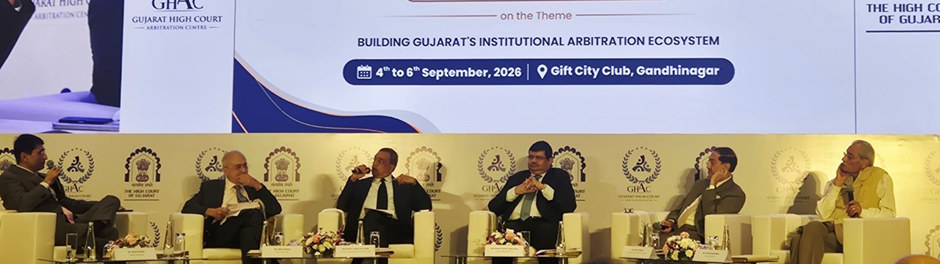
[In the picture from left to right: Mr Shalin Mehta, Mr Mihir Thakore, Justice M. R. Shah, Justice Tejas Karia, Mr Kamal Trivedi and Mr Janak Dwarkadas]
The panel comprised Justice Tejas Karia, Judge, Delhi High Court, Justice M. R. Shah, Former Judge, Supreme Court of India, Mr Kamal Trivedi, Advocate General, State of Gujarat, Mr Mihir Thakore, Senior Advocate and Mr Janak Dwarkadas, Senior Advocate, and was moderated by Mr Shalin Mehta, Senior Advocate. The discussion brought together experience from the judiciary, the Bar and arbitration practice to examine the continuing challenges surrounding Sections 9, 11, 34 and 37, Arbitration and Conciliation Act, 1996 (Arbitration and Conciliation Act), institutional arbitration, enforcement and arbitral independence.
Post-2015 arbitration: progress in law, challenges in implementation
Opening the discussion, Justice Tejas Karia considered whether the continued litigation surrounding Sections 9, 11, 34 and 37, Arbitration and Conciliation Act reflected shortcomings in the legislation or difficulties in implementation.
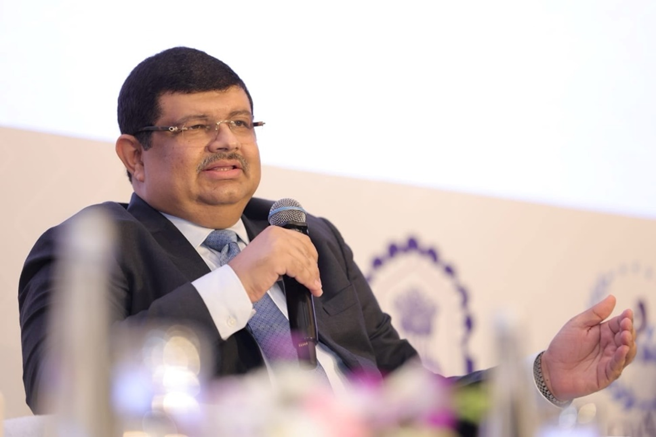
[In Picture: Justice Tejas Karia]
He viewed the problem as a combination of both, while emphasising that India had made substantial progress over the preceding decade. Referring to Section 5, Arbitration and Conciliation Act and the Supreme Court’s decision in Kandla Export Corpn. v. OCI Corpn., (2018) 14 SCC 715, he noted that the Arbitration Act constitutes a complete code and that the courts’ role under provisions such as Sections 9, 11 and 34, Arbitration and Conciliation Act should be understood as supervisory and supportive rather than as unrestricted judicial intervention.
Justice Karia stressed that the objective should not simply be to eliminate courts from the arbitration ecosystem. Instead, judicial intervention should support the arbitral process while ensuring that arbitration does not become another form of prolonged litigation.
Emergency arbitration as an alternative to court intervention
A significant part of Justice Karia’s intervention concerned emergency arbitration and the possibility of reducing the burden on courts for interim measures. He observed that emergency arbitration is recognised internationally and suggested that statutory recognition would strengthen the institutional arbitration framework in India. Referring to the proposed Section 9A, Arbitration and Conciliation Act, he explained that emergency arbitration could provide a faster and confidential mechanism for obtaining interim relief, particularly in institutional arbitrations.
According to Justice Karia, emergency arbitration could enable parties to obtain interim measures in less than 14 days without immediately approaching the courts. Once the arbitral tribunal is constituted, the order could subsequently be modified, varied or vacated by the tribunal.
He also highlighted proposed reforms concerning appointments under Section 11, including the possibility of delegating appointment functions to trusted and recognised arbitral institutions. Dedicated arbitration benches in High Courts and greater specialisation at the district judiciary level were also suggested as ways of improving consistency and reducing delays.
Section 34 and the debate over judicial scrutiny
The panel then examined the continuing controversy surrounding challenges to arbitral awards under Section 34, Arbitration and Conciliation Act.
Justice Karia noted that one of the central questions was whether the answer lies in providing broader appellate review or in improving the quality of arbitral awards so that extensive judicial intervention becomes unnecessary.
He referred to the introduction of patent illegality as a ground of challenge for domestic awards and observed that, although the statutory framework expressly sought to prevent a review of facts or merits, the breadth of interpretation continued to create difficulties.
He advocated greater exposure and capacity building for judges dealing with arbitration matters so that Sections 34 and 37, Arbitration and Conciliation Act are applied consistently. He also emphasised that parties themselves must develop greater maturity in understanding that an arbitral award is binding and should ordinarily be challenged only in exceptional circumstances.
In this context, Justice Karia supported the imposition of actual costs where parties pursue unjustified challenges:
“…there is also need to change the mindset.”
He maintained that frivolous challenges could be discouraged if parties faced meaningful cost consequences.
The question of appellate review
Justice M. R. Shah, Former Judge, Supreme Court of India, offered a different perspective on the scope of judicial scrutiny. He questioned whether an excessively narrow Section 34, Arbitration and Conciliation Act jurisdiction could itself create difficulties when the quality of arbitral awards remains inconsistent. Justice Shah supported the possibility of a forum capable of exercising appellate scrutiny over questions of law and fact in appropriate circumstances.
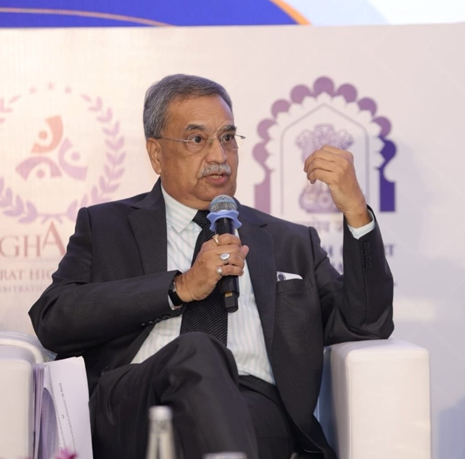
[In Picture: Justice M. R. Shah]
However, Justice Karia cautioned that the first priority should be improving the quality of arbitration and the quality of arbitral awards. Justice Karia also emphasised that arbitration has its own procedural character and that even experienced former judges may need to develop a different approach when acting as arbitrators. He emphasised:
“They should unlearn and learn again how to do arbitration when they sit as an arbitrator.”
He further cautioned that treating Section 34 or Section 37, Arbitration and Conciliation Act proceedings as ordinary first appeals could undermine the very purpose of arbitration. If an arbitration is completed in approximately a year and a half but the appellate process takes many additional years, the system risks moving backwards rather than forwards.
Introducing greater discipline into court proceedings
The moderator, Mr Shalin Mehta, raised the possibility of imposing strict time limits on lawyers appearing in arbitration-related appeals.

[In Picture: Mr Shalin Mehta]
Justice Karia referred to the chess clock method used in arbitration, under which each side is allocated a defined amount of hearing time. He suggested that a similar approach could be considered for court proceedings involving Sections 34 and 37, Arbitration and Conciliation Act.
He nevertheless maintained that Section 9, Arbitration and Conciliation Act and emergency arbitration should coexist. While institutional arbitration may provide an emergency arbitrator, ad hoc arbitration would still require judicial intervention for certain interim measures, particularly where third-party interests are involved.
The need for specialised arbitration courts
Mr Mihir Thakore, drew attention to the practical difficulties faced by judges handling complex arbitration matters alongside numerous other categories of litigation.
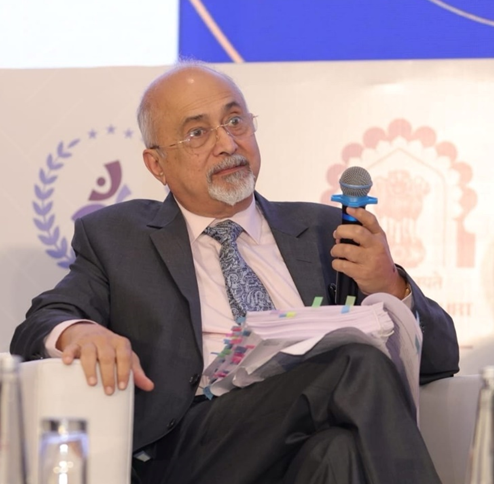
[In Picture: Mr Mihir Thakore]
He argued that where courts are expected to examine highly complex commercial disputes involving extensive records, expecting them to dispose of challenges within extremely short periods may itself be unrealistic.
The solution, he suggested, lies in developing a specialised judicial ecosystem for arbitration.
The discussion therefore moved beyond the question of whether Section 34, Arbitration and Conciliation Act should be broad or narrow and towards a larger institutional question: whether India needs specialised judicial structures capable of dealing exclusively with arbitration matters.
The 2015 amendments: substantial reform, but an unfinished agenda
Mr Kamal Trivedi, assessed the impact of the 2015 amendments as a cumulative reform rather than a collection of isolated changes.
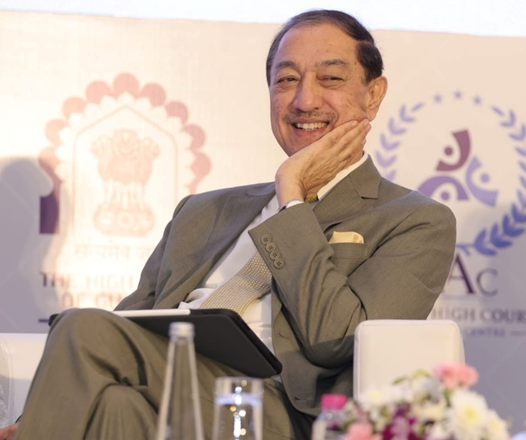
[In Picture: Mr Kamal Trivedi]
He highlighted provisions relating to arbitrator appointments and disclosures, fee structures, interim protection, costs and the stay of awards as measures that collectively sought to create greater confidence in the arbitral process. Summarising the impact of the reforms, he stated:
“If I were to give a report card, I would say we have substantially reformed our law.”
However, he identified a significant unfinished aspect of reform: the culture surrounding arbitration. In his view, India needs to develop a mindset in which arbitration is treated as an effective dispute resolution mechanism rather than as another stage of litigation.
Fast-track arbitration and time-bound disposal
Mr Trivedi also called attention to Section 29B, Arbitration and Conciliation Act concerning fast-track arbitration. He suggested reconsidering the point at which parties are required to opt for fast-track proceedings so that the decision could potentially be taken at a later stage when the evidentiary position becomes clearer.
He further highlighted the prolonged duration of Section 34 proceedings and the danger that an arbitral award may become merely a “paper award” if enforcement remains delayed. Among his suggestions were fixed timelines for Section 34 and Section 37, Arbitration and Conciliation Act proceedings, supported by dedicated benches and restrictions on adjournments.
He also called for the Arbitration Council of India to become operational, with arbitral institutions graded and arbitrators accredited. Most significantly, Mr. Trivedi strongly favoured institutional arbitration over ad hoc arbitration:
“Ad-hoc arbitration must go as a matter of rule.”
Building “Arbitration India” as a credible brand
Mr Janak Dwarkadas, approached India’s arbitration challenge from the perspective of institutional credibility and user confidence.
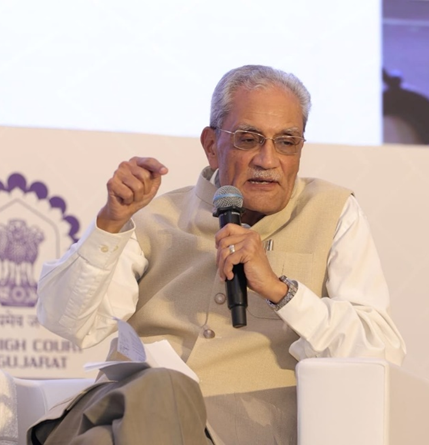
[In Picture: Mr Janak Dwarkadas]
He proposed viewing “Arbitration India” as a brand, arguing that successful brands depend upon three qualities: repeat, recall and recommendation. The same, he suggested, should be true of India’s arbitration system. Parties should be able to recall Indian arbitration institutions, recommend them and repeatedly choose them for commercial contracts.
For Mr Dwarkadas, arbitration exists primarily for the litigant seeking a quick, fair and transparent outcome.
“Commerce cannot wait.”
He argued that procedural provisions can sometimes be used by losing parties to delay payment and prolong litigation. In such circumstances, the claimant may spend years pursuing an award that has already been obtained. He referred to statistics discussed during the session concerning the time taken at the Section 34 and Section 37, Arbitration and Conciliation Act stages and argued that prolonged post-award litigation can undermine the commercial purpose of arbitration.
Why institutional arbitration matters
Mr Dwarkadas highlighted the quality-control mechanisms associated with established arbitral institutions and contrasted them with the uncertainties of ad hoc arbitration.
He referred to leading institutions such as the London Court of International Arbitration (LCIA), Singapore International Arbitration Centre (SIAC) and International Chamber of Commerce (ICC), observing that institutional reputation creates an incentive to maintain the quality of arbitral proceedings and awards.
Justice Karia supplemented this discussion by referring to Delhi High Court statistics concerning challenges based on patent illegality. He observed that while such challenges are frequently raised, a comparatively smaller proportion ultimately result in awards being set aside on that ground. He also stressed the importance of monitoring such data across India to assess whether reforms are actually producing measurable improvements.
Institutional arbitration must begin with the contract
Justice Shah raised an important practical point: institutional arbitration cannot become widespread unless parties select institutional mechanisms at the time they draft their contracts.
Justice Karia agreed, emphasising that institutional awareness and reputation are crucial. Institutions must demonstrate their capabilities and actively communicate the value they provide to commercial users. He also emphasised the importance of institutional identity.
Mr Dwarkadas similarly observed that the absence of credible alternatives had historically contributed to the dominance of ad hoc arbitration. As credible institutions emerge and establish their reputations, parties can increasingly incorporate them into arbitration clauses. He emphasised:
“It is a brand which people will recall, repeat and recommend.”
The discussion also recognised the importance of visibility and outreach by institutions themselves, with GHAC Arbitration Week presented as part of the process of building awareness and confidence in institutional arbitration.
Enforcement is the ultimate test
Mr Thakore acknowledged that the 2015 amendments had introduced safeguards concerning stays of awards, including the possibility of conditions and deposits. However, he observed that practical difficulties remain because stays are not always conditioned upon deposits and losing parties may pursue procedural avenues during execution.
He highlighted uncertainty over which court should handle execution and the possibility of repeated objections prolonging enforcement. One proposal was that the court dealing with the Section 34, Arbitration and Conciliation Act challenge should also have a role in execution, thereby avoiding conflicting proceedings before different courts.
Mr Trivedi supported the idea of a dedicated court dealing with both Section 34, Arbitration and Conciliation Act and execution proceedings, while Justice Karia pointed out that execution is ordinarily connected to the location of assets, creating its own jurisdictional complications.
Justice Karia also stressed the importance of asset tracing and interim measures where parties attempt to move or conceal assets through special purpose vehicles.
Deposit alone cannot solve the enforcement problem
Justice Shah emphasised that requiring a losing party to deposit money does not necessarily solve the problem faced by a successful claimant.
“He wants money. After five years or six years, suppose he will get the money. But in the meantime, his entire business will be finished.”
The observation captured one of the principal concerns running through the session: an arbitration system cannot be considered efficient merely because an award is eventually upheld. The successful party must also be able to obtain the economic benefit of that award within a commercially meaningful period.
Patent illegality and the risk of prolonged challenges
Mr Dwarkadas observed that Section 34, Arbitration and Conciliation Act challenges have become highly fact-specific in complex commercial matters. He explained that judges dealing with large records may find it difficult to determine at an early stage whether a challenge genuinely raises patent illegality without first understanding the underlying dispute.
He therefore returned to the idea of specialised arbitration courts and argued that the definition of the “court” within the arbitration framework should ultimately accommodate specialised judicial structures dealing exclusively with arbitration.
His broader argument was that reform cannot succeed merely by narrowing statutory grounds of challenge if the institutional machinery continues to process arbitration disputes through an overburdened general court system.
Changing the mindset of courts, counsel and arbitrators
Justice Shah identified mindset as one of the most important unresolved issues in Indian arbitration. He argued that the necessary change must involve courts, advocates and arbitrators alike. Arbitration, he stressed, should not be approached as though it were ordinary civil litigation.
The tendency to produce excessive documentary material and apply conventional civil procedure and evidentiary practices can undermine the flexibility and efficiency intended by the arbitration framework. He summed up the problem:
“Unless and until we change the mindset, we are not going to achieve anything.”
The observation resonated with the broader discussion on institutionalisation. Legislative provisions can create a framework, but the success of that framework ultimately depends upon the behaviour of users, lawyers, arbitrators and courts.
GIFT City and the development of a preferred arbitral seat
The discussion subsequently turned towards India’s ambition of becoming a major international arbitration destination, with particular attention to Gujarat International Finance Tec-City (GIFT City).
Justice Karia cautioned against treating India as a single arbitration “hub”, observing that successful arbitration destinations are generally associated with particular seats such as Singapore, London and Paris.
He identified three essential characteristics of a preferred arbitral seat:
-
Infrastructure;
-
Availability of experienced arbitrators and a Bar; and
-
A reliable supervisory court.
He explained that these factors provide parties with confidence in the first instance when they are drafting the contract itself.
A specialised judicial structure for GIFT City
Justice Karia identified GIFT City as particularly well positioned to become a preferred seat for domestic and international arbitration, given its infrastructure, international financial ecosystem, connectivity and concentration of commercial activity.
He suggested establishing a dedicated bench of the Gujarat High Court in GIFT City to exercise supervisory jurisdiction over arbitrations seated there.
According to him, this could eventually develop into a full-fledged international commercial court, drawing appropriate lessons from institutions such as the Dubai International Financial Centre (DIFC) Courts, the Abu Dhabi Global Market (ADGM) Courts and the Singapore International Commercial Court (SICC).
He regarded the development of GIFT City as a preferred arbitral seat as an important opportunity for Gujarat and India, particularly if arbitral institutions and specialised judicial supervision can be developed alongside its commercial infrastructure.
Judicial intervention must support, not frustrate, arbitration
Justice Shah subsequently addressed the broader question of the Supreme Court’s role in shaping Indian arbitration jurisprudence.
He observed that the Supreme Court has intervened when necessary to resolve difficulties and clarify the legal framework but maintained that judicial intervention should remain limited and should assist the objectives of the Arbitration and Conciliation Act rather than undermine them.
The discussion thus highlighted a delicate balance. Courts remain essential to the arbitration ecosystem, but excessive judicial intervention can weaken party autonomy, prolong proceedings and reduce the commercial attractiveness of arbitration.
IBA Guidelines 2024 and the evolving duty of disclosure
The second major theme of the session concerned the IBA Guidelines on Conflicts of Interest in International Arbitration 2024.
Justice Shah observed that disclosure requirements are intended to ensure transparency and independence in the eyes of litigants. However, he expressed concern that declarations concerning independence, availability and relationships can sometimes become routine and mechanical rather than substantive.
He stressed that an arbitrator must genuinely assess whether they have sufficient time to undertake an arbitration and whether their existing professional relationships could affect perceptions of independence.
He also expressed concern about situations in which nominee arbitrators may begin to act like counsel for the party that appointed them, which, in his view, undermines the independence expected from an arbitral tribunal.
Continuous disclosure and the “when in doubt, disclose” principle
Justice Karia explained that India has incorporated elements of the IBA conflict framework into its statutory regime through the Fifth and Seventh Schedules of the Arbitration and Conciliation Act.
However, modern arbitration has introduced additional circumstances, including third-party funding, experts, changing counsel and overlapping professional relationships. These developments reinforce the need for a continuing duty of disclosure throughout the arbitration. He emphasised that disclosure does not automatically require recusal. Instead, disclosure gives the parties an opportunity to make an informed decision about whether to raise an objection.
He endorsed the internationally recognised approach:
“When in doubt disclose.”
Justice Karia further explained that the relevant assessment should be made from the perspective of the party considering whether there is a reasonable apprehension concerning an arbitrator’s independence or impartiality.
He also pointed out that the 2024 IBA Guidelines address circumstances not expressly covered by India’s existing statutory schedules, including developments involving professional relationships and social media. He suggested that these developments provide an opportunity to consider whether India’s disclosure framework should evolve further.
Social media and overlapping professional relationships
Mr Trivedi examined the practical implications of the expanded Orange List under the 2024 IBA Guidelines. He noted that overlapping professional relationships may create perceptions of loyalty, dependence or predisposition. Similarly, views expressed publicly on social media or other platforms may become relevant if an individual subsequently acts as an arbitrator in a dispute connected with those views.
He explained that the IBA Guidelines operate through a colour-coded system comprising Red, Orange and Green Lists, while India’s statutory framework contains corresponding categories through the Fifth and Seventh Schedules.
Although Mr Trivedi considered the expanded guidelines useful in identifying potential conflicts, he also cautioned that broader disclosure obligations could lead to over-disclosure and tactical challenges intended to delay arbitration. Nevertheless, he supported following the updated standards if India seeks to strengthen its position as an international arbitration jurisdiction.
Disclosure over non-disclosure
Mr Thakore supported a cautious approach to disclosure: “Disclosure is better than non-disclosure.”
Justice Shah similarly suggested that arbitrators should disclose relevant circumstances at the outset rather than wait for a challenge. If the parties are informed and nevertheless agree to proceed, the possibility of a later challenge on the same ground may be reduced.
Mr Dwarkadas also favoured wider disclosure, pointing to the serious consequences of discovering a potential conflict only after an arbitration has concluded. In his view, disclosure allows objections to be addressed at the appropriate stage, whereas non-disclosure may ultimately jeopardise the enforceability of an award.
Closing Remarks
The session at GHAC Week 2026 presented a detailed assessment of the state of Indian arbitration after the 2015 amendments and identified the institutional and cultural changes required for the next phase of development.
The discussion demonstrated that India has made significant legislative progress. The 2015 amendments strengthened arbitrator disclosure, interim measures, costs, enforcement and restrictions on judicial intervention. Yet the panellists repeatedly emphasised that legislative reform by itself cannot create an efficient arbitration ecosystem.
The next stage requires stronger institutions, specialised courts, faster appointment of arbitrators, effective enforcement mechanisms, meaningful time limits and a professional arbitration Bar. Equally important is a change in the approach of courts, advocates, arbitrators and users so that arbitration is not treated as ordinary civil litigation.
Institutional arbitration emerged as one of the strongest themes of the discussion. The panellists stressed that credible institutions must establish a reputation for quality, consistency and efficiency and that this reputation must ultimately translate into parties selecting those institutions at the contract-drafting stage.
The discussion on GIFT City added a geographical and institutional dimension to this reform agenda. With appropriate infrastructure, a strong arbitration ecosystem and specialised judicial supervision, GIFT City was identified as having the potential to emerge as a preferred arbitral seat.
The discussion on the IBA Guidelines 2024 similarly demonstrated that arbitral independence must be treated as a substantive obligation rather than a formal declaration. Continuous disclosure, particularly in relation to professional relationships, social media and other modern sources of potential conflict, will increasingly form part of the credibility of the arbitral process.
Ultimately, the session’s central message was that India’s arbitration reform must now move from changing the law to strengthening the ecosystem in which the law operates. Greater institutional confidence, specialised judicial capacity, effective enforcement and genuine arbitral independence will determine whether India’s arbitration framework can fulfil the ambitions created by the post-2015 reform era.