Updated on Aug. 18 at 5:42 p.m.
This month marks 40 years since the Senate considered Antonin Scalia’s nomination to the Supreme Court. Look to the Morning Reads section for a column from Christopher J. Scalia, one of the justice’s sons, about what that summer was like.
Plus, on Thursday, our friends at Briefly are hosting a LinkedIn Live event with Dan Haley, the chief legal officer for Flock Safety. Among other topics, they will address the Supreme Court’s Fourth Amendment jurisprudence.
At the Court
On Monday, the court released the second of its three summer order lists and announced that it had denied President Donald Trump’s request to reconsider a $5 million verdict against him in a case brought by E. Jean Carroll. For more on Monday’s order list, see the On Site section below.
Also on Monday, lawyers for a group of Texas families with children in the state’s public schools urged the justices to weigh in on the constitutionality of a 2025 law that requires each classroom in that state to display a copy of the Ten Commandments. For an overview of the dispute, see Amy’s coverage in the On Site section.
On Friday, the Trump administration urged the Supreme Court to pause a lower-court ruling that would halt construction of a new White House ballroom. A response to this request from the private nonprofit that challenged the construction project is due today by noon EDT.
On July 27, the Trump administration asked the Supreme Court on its emergency docket to clear the way for the implementation of President Donald Trump’s executive order on mail-in voting. Twelve states later echoed this request in their own application. One week later, the group of 23 states and the District of Columbia challenging the order asked the court to deny these requests. Last Wednesday, the Trump administration urged the court to “promptly” issue its decision.
Morning Reads
Trump says White House needs ‘military complex’ as courts block his ballroom
Dan Diamond, The Washington Post (paywalled)
As the Supreme Court considers the Trump administration’s emergency docket request on construction of a new White House ballroom, administration officials, including President Donald Trump, are playing up the project’s supposed “crucial” role in national security. Trump has argued “that the ballroom is necessary to protect him and future presidents. He and his lawyers have contended that the ballroom is inseparable from the underground military complex,” the construction of which was not put on hold by the U.S. Court of Appeals for the District of Columbia Circuit, according to The Washington Post. Meanwhile, “Democrats, preservationists and other critics of the ballroom have said that arguments over the president’s security should remain separate from questions about whether Trump had the authority to demolish the East Wing, solicit hundreds of millions of dollars in private donations and begin building a 90,000-square-foot ballroom addition without getting approval from Congress.”
Attorney General Todd Blanche says DOJ may take states’ voter roll fight to Supreme Court
Alexandra Marquez, NBC News
During a Sunday appearance on NBC News’ “Meet the Press,” Attorney General Todd Blanche said “there’s a ‘possibility’ that the Justice Department will ask the Supreme Court to intervene in dozens of cases in which judges have ruled against the federal government’s efforts to gain broad access to state voter rolls ahead of November’s midterm elections.” “The cases stem from an executive order Trump signed asking states to turn over their voter rolls, including voters’ names, dates of birth, residential addresses, state driver’s licenses and the last four digits of their Social Security numbers,” in order to “allow the Justice Department to investigate any ‘deficiencies’ or ‘anomalies.’” Some states voluntarily provided access to their voter rolls, but “the Justice Department has sued 30 states and Washington, D.C., for refusing to comply.” Those lawsuits have been unsuccessful so far. On Sunday, Blanche said that “the idea that the Department of Justice is trying to investigate issues around elections to make sure they’re fair … is not something that we should be running away from. That’s something we should be running right towards.”
One Crazy Summer
Christopher J. Scalia, National Review
In a column for the National Review, Justice Antonin Scalia’s son, Christopher J. Scalia, shared memories from his father’s confirmation hearings, which took place 40 years ago this month. He described attending the first part of the questioning alongside his eight siblings. “The extent of our media training was my mother introducing us to the concept of hot mics – her way of warning us to behave ourselves. Did we want C-SPAN to broadcast our sibling squabbles and stupid jokes,” Scalia wrote. He added that his father’s new job did little to change their family’s life, noting how strange that must sound today, when not just justices, but their kids, face scrutiny and security threats. “The nomination and hearings were remarkable events in what otherwise felt like a normal summer of riding my BMX bike with friends, reading box scores, watching reruns, and trying to get infinite lives in Super Mario Bros.”
On Site
Court News
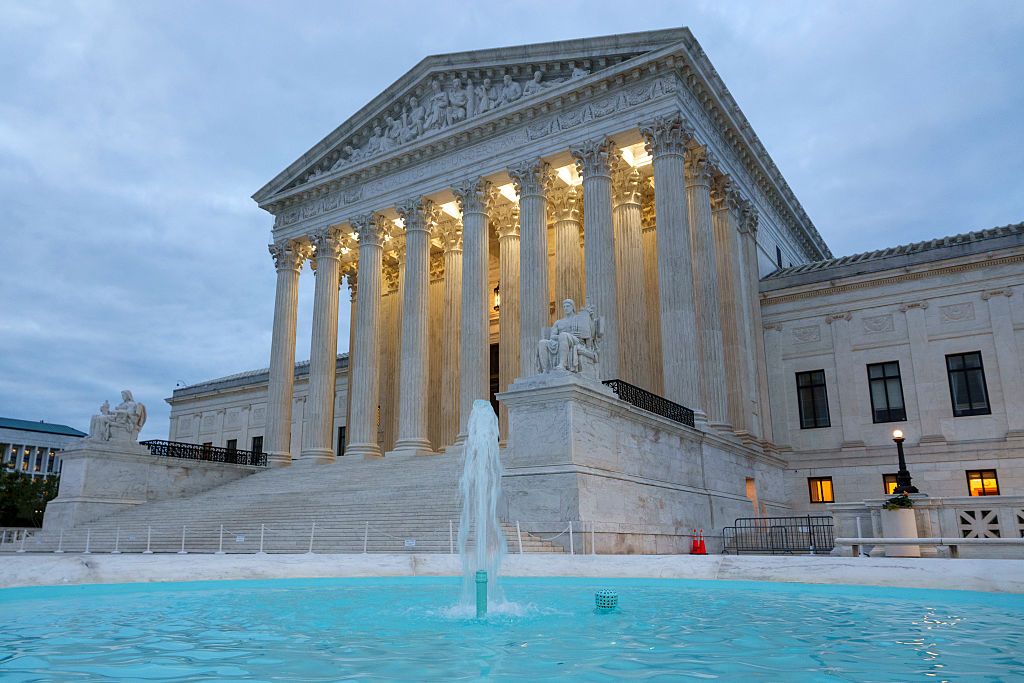
Court turns down Trump’s request to reconsider its refusal to hear Carroll suit against him
The Supreme Court on Monday morning turned down President Donald Trump’s request to reconsider the justices’ denial of review in a civil suit brought by journalist E. Jean Carroll, which yielded a $5 million verdict against the president. Consistent with its general practice, the court did not provide any explanation for its decision to deny Trump’s petition for rehearing in Trump v. Carroll. The court rarely grants such petitions; indeed, it has not done so since 2018.
Court News
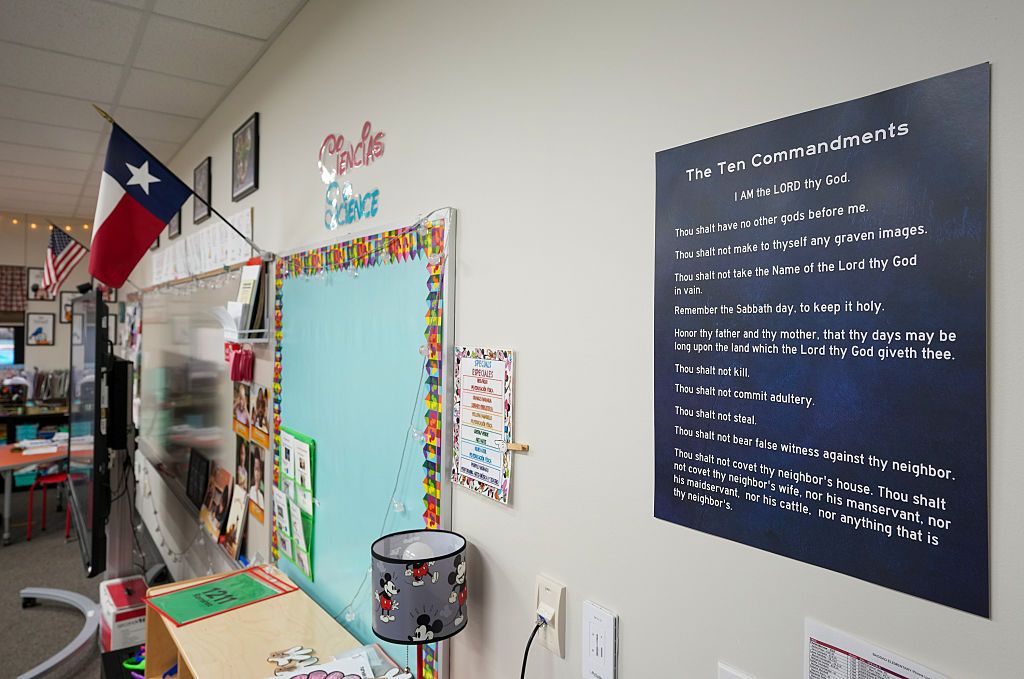
Texas families ask Supreme Court to take up challenge to Ten Commandments in schools
Lawyers for a group of Texas families with children in public schools asked the justices to review a ruling by the U.S. Court of Appeals for the 5th Circuit that upheld a 2025 Texas law that requires each classroom in that state to display a copy of the Ten Commandments. The challengers told the justices that the lower court “flouted this Court’s binding precedents and gutted the religious-freedom rights of public-school children and parents.”
Contributor Corner
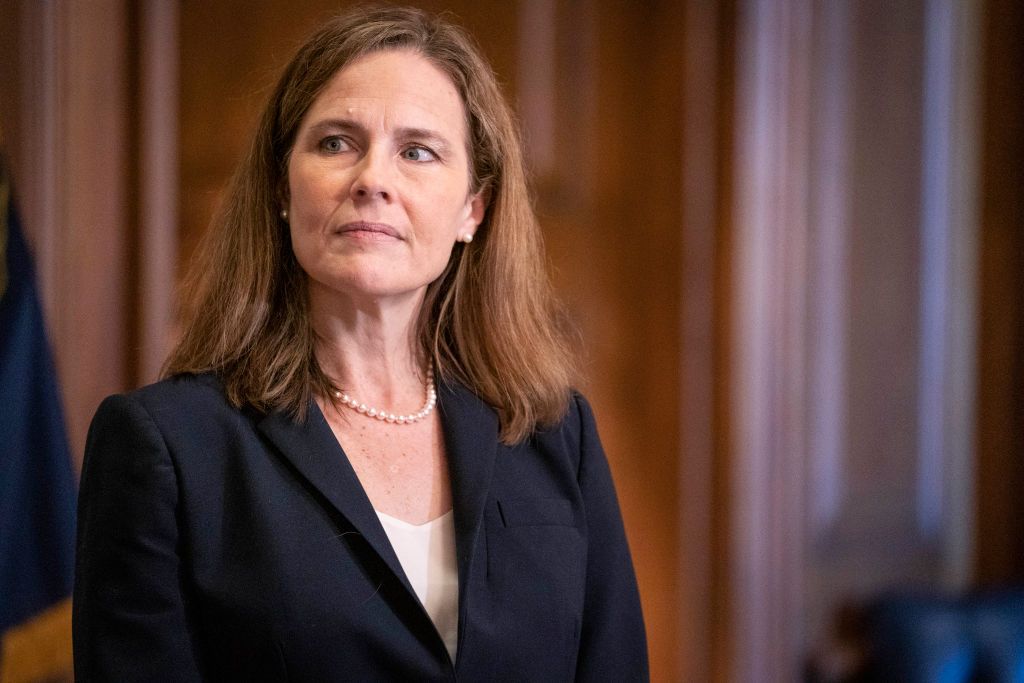
Who is Justice Barrett?
In his Empirical SCOTUS column, Adam Feldman analyzed Justice Amy Coney Barrett’s approach to her work, including the circumstances in which she “is most likely to break ranks” with other conservative justices. “Barrett begins from recognizable conservative and originalist premises. But she separately tests whether the court’s reasoning and remedy are commensurate with the text, precedent, history, record, and procedural vehicle before it,” Feldman wrote.
Contributor Corner
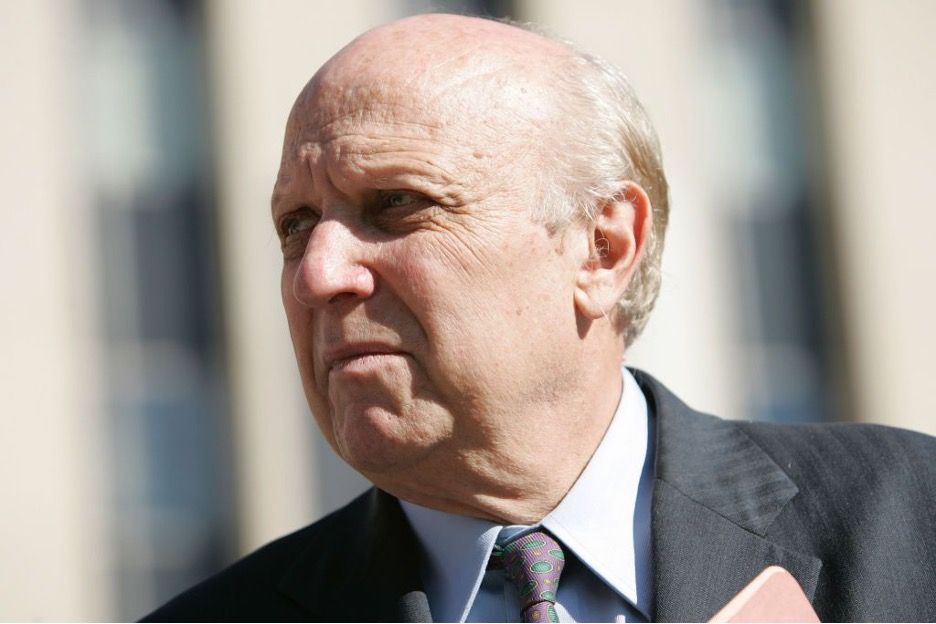
SCOTUS litigator Floyd Abrams at 90
For his In Other Words column, Ronald Collins focused on Floyd Abrams, a prominent First Amendment lawyer whose “name is synonymous with freedom of speech and the press.” Now 90, “Abrams shows few signs of slowing down as he moves towards the century mark,” according to Collins.
A Closer Look
Joseph Lochner
Continuing our series of Closer Looks on some of the Supreme Court's most well-known litigants, we turn to Joseph Lochner, the plaintiff in 1905’s Lochner v. New York. The case became the defining decision of the so-called “Lochner era,” a period in which the Supreme Court frequently invalidated economic regulations on constitutional due process grounds.
Joseph Lochner immigrated from Bavaria, Germany, to the United States at the age of 20, in 1882. Lochner settled in Utica, New York, which was a popular destination for many European immigrants from around 1880 to 1930.
In his first eight years in the U.S., Lochner worked at a bakery in Utica. Around 1890, he opened his own small, family bakeshop in town. The Observer described the bakery as such “a small place … that it is remarkable that it was ever discovered by the people who are now its patrons.” According to the paper, his bakery was well received by “housewives” for the “neatness” and “excellence” of the products and became “one of the best known [neighborhood] enterprises.” But in 1894, the Trades Union Label League started a boycott targeting Lochner’s bakery, in part because he allowed bakers to live with him and he hired non-union workers.
As Lochner was establishing himself as a presence in Utica’s bakery industry, efforts across the state emerged to regulate the conditions of bakery workers. In 1893, Edward Marshall, a muckraker, published an article detailing the unsanitary nature and atrocious working conditions in New York bakeries. A report in 1895 by New York factory inspectors affirmed Marshall’s report, finding many bakeries were filled with insects and rats.
In response to these reports, efforts to regulate the bakery industry, including through maximum work hour laws, gained support. Labor unions believed that limiting the number of hours a baker could work would improve workers’ health and raise wages. Additionally, with many unionized bakery jobs already curbing the total time their employees could be on the job, the unions wanted to reduce competition from non-unionized bakery workers, who they believed reduced their wages.
The Bakeshop Act, which aimed to prevent biscuit, cake, and bread bakers from working more than 10 hours a day or 60 hours a week, was unanimously passed by both houses of the New York state legislature and signed into law by Gov. Levi P. Morton in 1895. The New York Association of Master Bakers, a trade group made up of independent bakeries, believed that the act was being weaponized by labor unions to punish non-union bakeries. At the organization’s 1901 and 1902 conference, they pledged to bring a test case, challenging the constitutionality of the law, all the way to the Supreme Court.
Lochner, who was a member of the New York Association of Master Bakers, was an ideal plaintiff for the association: he was on friendly terms with his employees and worked alongside them. In 1899, Lochner was charged with violating The Bakeshop Act after he allowed an employee to work more than 10 hours to learn cakemaking. He was fined $25. In 1902, Lochner was again charged with violating the act after allowing an employee, Aman Schmitter, to work more than 60 hours in a week.
Lochner’s attorney sought to get the charges dismissed on a technicality, but those efforts were unsuccessful. The case then went to trial in 1903 where Lochner declined to plead guilty and intentionally raised no defense in an attempt to help create a vehicle for a test case for appeal. In a 3-2 decision, the New York Appellate Division upheld Lochner’s conviction. In doing so, the court rejected Lochner’s argument that the act violated the doctrine of “class legislation,” which held that policies could not favor a specific group in economic regulations under the Constitution’s 14th Amendment. Lochner’s appeal to the highest court in the state, the New York Court of Appeals, also proved unsuccessful.
The New York Association of Master Bakers then appealed the case to the Supreme Court. In what was seen at the time as a surprising decision, the Supreme Court sided with Lochner 5-4 in April 1905. “The general right to make a contract in relation to his business is part of the liberty of the individual protected by the Fourteenth Amendment to the Federal Constitution,” and “[t]he right to purchase or to sell labor is part of the liberty protected by this amendment” wrote Justice Rufus Peckham in his majority opinion. In dissent, Justice Oliver Wendell Holmes skewered the majority for trying to implement their preferred economic model, writing that “a Constitution is not intended to embody a particular economic theory.”
The decision in Lochner became the defining case in the Supreme Court’s Lochner era, in which the court struck down economic regulations, including state minimum wage laws and parts of President Franklin D. Roosevelt’s “New Deal.” The Lochner era is generally considered to have ended when the court upheld Washington’s minimum wage law for women in West Coast Hotel Co. v. Parrish in 1937.
Today, Lochner is often criticized by legal scholars as an example of the court engaging in judicial activism to promote business rights. Chief Justice John Roberts himself described the case as an example of the court “not interpreting the law, [but] making the law." (That said, the decision is not without its defenders.)
After the case was decided, Lochner returned to private life and continued to run his bakery. A 1909 advertisement for this business ran in The Utica Observer promoting “fresh macaroons and lady fingers.” That same year, The Observer reported that Lochner and his son visited Germany. Another advertisement from Lochner ran in 1911 that wished his customers a “Merry [Christmas] and a Happy New Year.” It is not known what ultimately happened to Lochner’s bakery. Lochner died on Dec. 14, 1939.
SCOTUS Quote
MR. FREDERICK: “… With Aereo’s technology, if I’m making a copy using Aereo’s system, no one else can look at it. Even if you happen to have watched the same program, you can’t watch my copy, I can’t download it.”
CHIEF JUSTICE ROBERTS: “That's just saying your copy is different from my copy.”
MR. FREDERICK: “Correct.”
CHIEF JUSTICE ROBERTS: “But that's the reason we call them copies, because they're the same.”